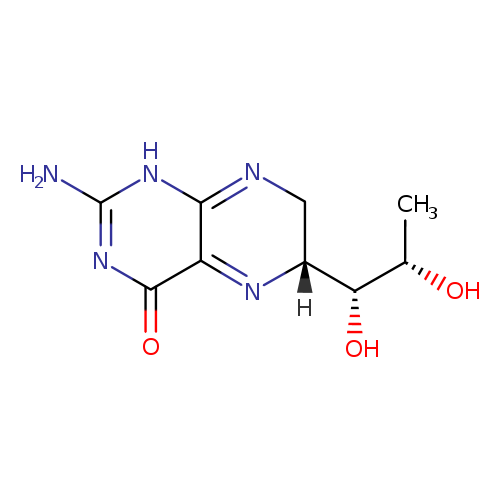
4a-Carbinolamine tetrahydrobiopterin, also known as 6,7-dihydrobiopterin or Q-H2BPT, belongs to the class of organic compounds known as biopterins and derivatives. These are coenzymes containing a 2-amino-pteridine-4-one derivative. They are mainly synthesized in several parts of the body, including the pineal gland. 4a-Carbinolamine tetrahydrobiopterin exists in all living organisms, ranging from bacteria to humans. Based on a literature review a significant number of articles have been published on 4a-Carbinolamine tetrahydrobiopterin.
belongs to the class of organic compounds known as biopterins and derivatives. These are coenzymes containing a 2-amino-pteridine-4-one derivative. They are mainly synthesized in several parts of the body, including the pineal gland.
Quercetin can undergo the hydrolytic cleavage of its heterocyclic C ring, a reaction conducted by Butyrivibrio and Clostridium species [32,33], to form phloroglycinol, an A ring-derived metabolite, and DHPAA, a B ring-derived metabolite (Figure 7).
Written in the paper as “phloroglycinol” and “hydrolytic cleavage of its heterocyclic C ring”