Loading
Record Information
Version1.0
Creation Date2016-09-30 22:54:07 UTC
Update Date2026-11-27 18:34:45 UTC
BMDB IDBMDB0002329
Secondary Accession Numbers
  • BMDB02329
Metabolite Identification
Common NameOxalic acid
Description
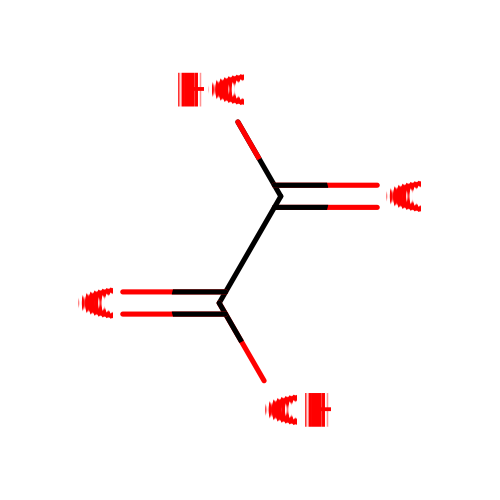
Oxalic acid, also known as oxalate or ethanedioic acid, belongs to the class of organic compounds known as dicarboxylic acids and derivatives. These are organic compounds containing exactly two carboxylic acid groups. Oxalic acid exists as a solid, possibly soluble (in water), and a moderately acidic compound (based on its pKa) molecule. Oxalic acid exists in all living organisms, ranging from bacteria to humans. Oxalic acid is a potentially toxic compound. Oxalic acid has been found to be associated with several diseases known as hemodialysis and uremia; also oxalic acid has been linked to several inborn metabolic disorders including glycolic aciduria, primary hyperoxaluria I, and fumarase deficiency.
Structure
Thumb
Synonyms
ValueSource
EthandisaeureChEBI
Ethane-1,2-dioic acidChEBI
Ethanedioic acidChEBI
H2OxChEBI
HOOCCOOHChEBI
OxalsaeureChEBI
Ethane-1,2-dioateGenerator
EthanedioateGenerator
OxalateGenerator
Ammonium oxalateHMDB
Ethanedioic acid dihydrateHMDB
EthanedionateHMDB
Ethanedionic acidHMDB
Kyselina stavelovaHMDB
OxaalzuurHMDB
Oxalic acid 2-hydrateHMDB
Oxalic acid anhydrousHMDB
Oxalic acid diammonium saltHMDB
Oxalic acid dihydrateHMDB
Acid, oxalicHMDB
Aluminum oxalateHMDB
Chromium (3+) oxalate (3:2)HMDB
Dipotassium oxalateHMDB
Iron oxalateHMDB
Magnesium oxalateHMDB
Magnesium oxalate (1:1)HMDB
Oxalate, dilithiumHMDB
Oxalate, disodiumHMDB
Oxalate, monohydrogen monopotassiumHMDB
Oxalate, monopotassiumHMDB
Oxalate, potassiumHMDB
Chromium oxalateHMDB
Dilithium oxalateHMDB
Manganese (2+) oxalate (1:1)HMDB
Monosodium oxalateHMDB
Oxalate, chromiumHMDB
Oxalate, dipotassiumHMDB
Oxalate, magnesiumHMDB
Oxalate, monosodiumHMDB
Oxalate, potassium chromiumHMDB
Oxalate, sodiumHMDB
Potassium oxalateHMDB
Potassium oxalate (2:1)HMDB
Diammonium oxalateHMDB
Disodium oxalateHMDB
Oxalate, aluminumHMDB
Oxalate, diammoniumHMDB
Oxalate, ferricHMDB
Oxalate, monoammoniumHMDB
Potassium chromium oxalateHMDB
Chromium (2+) oxalateHMDB
Ferric oxalateHMDB
Iron (2+) oxalate (1:1)HMDB
Iron (3+) oxalateHMDB
Monoammonium oxalateHMDB
Monohydrogen monopotassium oxalateHMDB
Monopotassium oxalateHMDB
Oxalate, ironHMDB
Sodium oxalateHMDB
Oxalic acidKEGG
Chemical FormulaC2H2O4
Average Molecular Weight90.0349
Monoisotopic Molecular Weight89.995308552
IUPAC Nameoxalic acid
Traditional Nameoxalic acid
CAS Registry Number144-62-7
SMILES
OC(=O)C(O)=O
InChI Identifier
InChI=1S/C2H2O4/c3-1(4)2(5)6/h(H,3,4)(H,5,6)
InChI KeyMUBZPKHOEPUJKR-UHFFFAOYSA-N
Chemical Taxonomy
Description belongs to the class of organic compounds known as dicarboxylic acids and derivatives. These are organic compounds containing exactly two carboxylic acid groups.
KingdomOrganic compounds
Super ClassOrganic acids and derivatives
ClassCarboxylic acids and derivatives
Sub ClassDicarboxylic acids and derivatives
Direct ParentDicarboxylic acids and derivatives
Alternative Parents
Substituents
  • Dicarboxylic acid or derivatives
  • Carboxylic acid
  • Organic oxygen compound
  • Organic oxide
  • Hydrocarbon derivative
  • Organooxygen compound
  • Carbonyl group
  • Aliphatic acyclic compound
Molecular FrameworkAliphatic acyclic compounds
External Descriptors
Ontology
StatusDetected but not Quantified
Origin
  • Endogenous
  • Exogenous
Biofunction
Not Available
Application
Not Available
Cellular locations
  • Peroxisome
Physical Properties
StateSolid
Experimental Properties
PropertyValueReference
Melting Point189.5 °CNot Available
Boiling PointNot AvailableNot Available
Water Solubility220 mg/mL at 25 °CNot Available
LogPNot AvailableNot Available
Predicted Properties
PropertyValueSource
logP-0.51ALOGPS
logP-0.26ChemAxon
logS-0.14ALOGPS
pKa (Strongest Acidic)1.36ChemAxon
Physiological Charge-2ChemAxon
Hydrogen Acceptor Count4ChemAxon
Hydrogen Donor Count2ChemAxon
Polar Surface Area74.6 ŲChemAxon
Rotatable Bond Count1ChemAxon
Refractivity14.44 m³·mol⁻¹ChemAxon
Polarizability6.23 ųChemAxon
Number of Rings0ChemAxon
BioavailabilityYesChemAxon
Rule of FiveYesChemAxon
Ghose FilterYesChemAxon
Veber's RuleYesChemAxon
MDDR-like RuleYesChemAxon
Spectra
Spectra
Biological Properties
Cellular Locations
  • Peroxisome
Biospecimen Locations
  • Bladder
  • Epidermis
  • Eye Lens
  • Fibroblasts
  • Intestine
  • Kidney
  • Liver
  • Mammary Gland
  • Milk
  • Pancreas
  • Placenta
  • Ruminal Fluid
  • Semen
  • Testis
Body Locations
Udder: Milk, Mammary Gland Skin: Epidermis, Fibroblasts Liver: Liver Rumen: Ruminal Fluid Kidneys: Kidney Intestines: Intestine, Pancreas Reproductive organs: Semen, Placenta, Testis Bladder: Bladder, Urine Eye: Eye Lens
Reproductive organs
Semen, Placenta, Testis
Udder
Milk, Mammary Gland
Bladder
Bladder, Urine
Intestines
Intestine, Pancreas
Skin
Epidermis, Fibroblasts
Eye
Eye Lens
Kidneys
Kidney
Liver
Liver
Rumen
Ruminal Fluid
Location Evidence
RelationTermDefinitionSources
Detected inMilk
UBERON:0001913
Fluid secreted by the mammary gland to feed the calf; contains fat, protein, lactose, minerals and vitamins.
2 papers
Detected inCortex
UBERON:0001851
Outermost layer of an organ[WP].
1 paper
Detected inSemen
UBERON:0001968
Fluid ejaculated by a bull, containing sperm and fluid from the accessory glands.
1 paper
Detected inTransudate
UBERON:0007779
Any bodily fluid that has passed through a membrane such as the capillary wall, as a result of unbalanced hydrostatic and osmotic forces.
1 paper
Detected inUrine
UBERON:0001088
Liquid waste made by the kidneys, carrying excess water, salts and nitrogen out of the body.
1 paper
Health Effects
RelationTermDefinitionSources
Detected inAcute Tubular Necrosis
NCIT:C34749
Acute renal failure caused by the cell death of the renal tubules. Causes include nephrotoxins, cytotoxic drugs, and antibiotics.
1 paper
Is biomarker ofMetritis
MONDO:1016935
No definition available
1 paper
CausesParturient paresis
MONDO:0024971
A disease of pregnant and lactating cows and ewes leading to generalized paresis and death. The disease, which is characterized by hypocalcemia, occurs at or shortly after parturition in cows and within weeks before or after parturition in ewes.
1 paper
Biological Processes
RelationTermDefinitionSources
Produced byamino acid catabolic process
GO:0009063
The chemical reactions and pathways resulting in the breakdown of amino acids, organic acids containing one or more amino substituents.
1 paper
Involved incation-anion balanceNo definition available
1 paper
Inhibitsmethanogenesis
GO:0015948
The chemical reactions and pathways resulting in the formation of methane, a colorless, odorless, flammable gas with the formula CH4. It is the simplest of the alkanes.
1 paper
Involved inosmotic adjustmentNo definition available
1 paper
Upregulatespropionate and butyrate productionNo definition available
1 paper
Production Traits
RelationTermDefinitionSources
Negatively associated withmethane productionNo definition available
1 paper
Pathways
Concentrations
BiospecimenStatusValueAgeSexConditionReferenceDetails
BladderExpected but not QuantifiedNot QuantifiedNot SpecifiedNot SpecifiedNormal
  • Not Applicable
details
EpidermisExpected but not QuantifiedNot QuantifiedNot SpecifiedNot SpecifiedNormal
  • Not Applicable
details
Eye LensExpected but not QuantifiedNot QuantifiedNot SpecifiedNot SpecifiedNormal
  • Not Applicable
details
FibroblastsExpected but not QuantifiedNot QuantifiedNot SpecifiedNot SpecifiedNormal
  • Not Applicable
details
IntestineExpected but not QuantifiedNot QuantifiedNot SpecifiedNot SpecifiedNormal
  • Not Applicable
details
KidneyExpected but not QuantifiedNot QuantifiedNot SpecifiedNot SpecifiedNormal
  • Not Applicable
details
LiverExpected but not QuantifiedNot QuantifiedNot SpecifiedNot SpecifiedNormal
  • Not Applicable
details
Mammary GlandDetected but not QuantifiedNot QuantifiedNot SpecifiedNot Specified
Normal
details
Mammary GlandDetected but not QuantifiedNot QuantifiedNot SpecifiedNot Specified
Normal
details
MilkDetected but not QuantifiedNot QuantifiedNot SpecifiedNot Specified
Normal
details
PancreasExpected but not QuantifiedNot QuantifiedNot SpecifiedNot SpecifiedNormal
  • Not Applicable
details
PlacentaExpected but not QuantifiedNot QuantifiedNot SpecifiedNot SpecifiedNormal
  • Not Applicable
details
Ruminal FluidDetected but not QuantifiedNot QuantifiedNot SpecifiedNot Specified
Normal
details
SemenDetected but not QuantifiedNot QuantifiedNot SpecifiedNot Specified
Normal
details
SemenDetected but not QuantifiedNot QuantifiedNot SpecifiedNot Specified
Normal
details
TestisExpected but not QuantifiedNot QuantifiedNot SpecifiedNot SpecifiedNormal
  • Not Applicable
details

No abnormal concentrations recorded

HMDB IDHMDB0002329
DrugBank IDDB03902
Phenol Explorer Compound IDNot Available
FooDB IDFDB031074
KNApSAcK IDC00001198
Chemspider ID946
KEGG Compound IDC00209
BioCyc IDOXALATE
BiGG ID34265
Wikipedia LinkOxalic_acid
METLIN ID113
PubChem Compound971
PDB IDNot Available
ChEBI ID16995
References
Synthesis ReferenceNot Available
Material Safety Data Sheet (MSDS)Not Available
General References
  1. Sun HZ, Shi K, Wu XH, Xue MY, Wei ZH, Liu JX, Liu HY: Lactation-related metabolic mechanism investigated based on mammary gland metabolomics and 4 biofluids' metabolomics relationships in dairy cows. BMC Genomics. 2017 Dec 2;18(1):936. doi: 10.1186/s12864-017-4314-1. [PubMed:29197344 ]

Enzymes

General function:
Inorganic ion transport and metabolism
Specific function:
Acts as a DIDS-sensitive anion exchanger mediating chloride, sulfate and oxalate transport. May fulfill critical anion exchange functions in male germ line during meiosis and hence may play a role in spermatogenesis. May be involved in a new regulatory pathway linking sulfate transport to RhoGTPase signaling in male germ cells. A critical component of the sperm annulus that is essential for correct sperm tail differentiation and motility and hence male fertility (By similarity).

Gene Name:
SLC26A8
Uniprot ID:
A6QNW6
Molecular weight:
108744.0
General function:
Involved in heme binding
Specific function:
Inter-alpha-trypsin inhibitor inhibits trypsin, plasmin, and lysosomal granulocytic elastase. Inhibits calcium oxalate crystallization.
Gene Name:
AMBP
Uniprot ID:
P00978
Molecular weight:
39235.0