
Showing metabocard for DG(18:4(6Z,9Z,12Z,15Z)/18:4(6Z,9Z,12Z,15Z)/0:0) (BMDB0007338)
| Record Information | ||||||||||||||||||||||||||||||||||||||||||||||||||||||||||
|---|---|---|---|---|---|---|---|---|---|---|---|---|---|---|---|---|---|---|---|---|---|---|---|---|---|---|---|---|---|---|---|---|---|---|---|---|---|---|---|---|---|---|---|---|---|---|---|---|---|---|---|---|---|---|---|---|---|---|
| Version | 1.0 | |||||||||||||||||||||||||||||||||||||||||||||||||||||||||
| Creation Date | 2016-09-30 23:35:20 UTC | |||||||||||||||||||||||||||||||||||||||||||||||||||||||||
| Update Date | 2020-05-21 16:27:57 UTC | |||||||||||||||||||||||||||||||||||||||||||||||||||||||||
| BMDB ID | BMDB0007338 | |||||||||||||||||||||||||||||||||||||||||||||||||||||||||
| Secondary Accession Numbers |
| |||||||||||||||||||||||||||||||||||||||||||||||||||||||||
| Metabolite Identification | ||||||||||||||||||||||||||||||||||||||||||||||||||||||||||
| Common Name | DG(18:4(6Z,9Z,12Z,15Z)/18:4(6Z,9Z,12Z,15Z)/0:0) | |||||||||||||||||||||||||||||||||||||||||||||||||||||||||
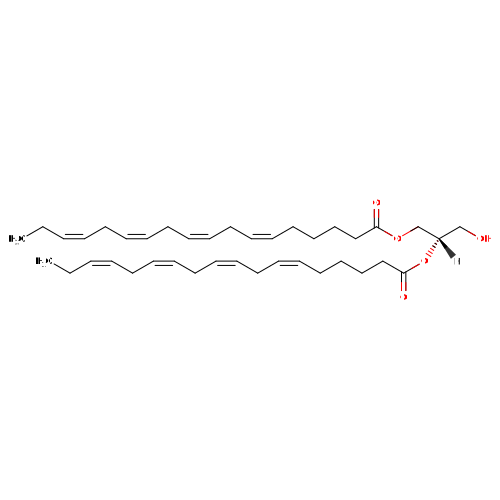
| Description | DG(18:4(6Z,9Z,12Z,15Z)/18:4(6Z,9Z,12Z,15Z)/0:0), also known as dg(18:4(6z,9z,12z,15z)/18:4(6z,9z,12z,15z)/0:0) or DAG(18:4/18:4), belongs to the class of organic compounds known as lineolic acids and derivatives. These are derivatives of lineolic acid. Lineolic acid is a polyunsaturated omega-6 18 carbon long fatty acid, with two CC double bonds at the 9- and 12-positions. Thus, DG(18:4(6Z,9Z,12Z,15Z)/18:4(6Z,9Z,12Z,15Z)/0:0) is considered to be a diradylglycerol lipid molecule. DG(18:4(6Z,9Z,12Z,15Z)/18:4(6Z,9Z,12Z,15Z)/0:0) is a very hydrophobic molecule, practically insoluble (in water), and relatively neutral. DG(18:4(6Z,9Z,12Z,15Z)/18:4(6Z,9Z,12Z,15Z)/0:0) participates in a number of enzymatic reactions, within cattle. In particular, DG(18:4(6Z,9Z,12Z,15Z)/18:4(6Z,9Z,12Z,15Z)/0:0) can be biosynthesized from PA(18:4(6Z,9Z,12Z,15Z)/18:4(6Z,9Z,12Z,15Z)); which is catalyzed by the enzyme phosphatidate phosphatase. Furthermore, DG(18:4(6Z,9Z,12Z,15Z)/18:4(6Z,9Z,12Z,15Z)/0:0) and stearidonoyl-CoA can be converted into TG(18:4(6Z,9Z,12Z,15Z)/18:4(6Z,9Z,12Z,15Z)/18:4(6Z,9Z,12Z,15Z)); which is catalyzed by the enzyme dg(18:4(6z,9z,12z,15z)/18:4(6z,9z,12z,15z)/0:0) O-acyltransferase. Furthermore, DG(18:4(6Z,9Z,12Z,15Z)/18:4(6Z,9Z,12Z,15Z)/0:0) can be biosynthesized from PA(18:4(6Z,9Z,12Z,15Z)/18:4(6Z,9Z,12Z,15Z)) through its interaction with the enzyme phosphatidate phosphatase. Furthermore, DG(18:4(6Z,9Z,12Z,15Z)/18:4(6Z,9Z,12Z,15Z)/0:0) and eicosatetraenoyl-CoA can be converted into TG(18:4(6Z,9Z,12Z,15Z)/18:4(6Z,9Z,12Z,15Z)/20:4(8Z,11Z,14Z,17Z)) through its interaction with the enzyme dg(18:4(6z,9z,12z,15z)/18:4(6z,9z,12z,15z)/0:0) O-acyltransferase. Furthermore, DG(18:4(6Z,9Z,12Z,15Z)/18:4(6Z,9Z,12Z,15Z)/0:0) can be biosynthesized from PA(18:4(6Z,9Z,12Z,15Z)/18:4(6Z,9Z,12Z,15Z)) through the action of the enzyme phosphatidate phosphatase. Finally, DG(18:4(6Z,9Z,12Z,15Z)/18:4(6Z,9Z,12Z,15Z)/0:0) and adrenoyl-CoA can be converted into TG(18:4(6Z,9Z,12Z,15Z)/18:4(6Z,9Z,12Z,15Z)/22:4(7Z,10Z,13Z,16Z)); which is catalyzed by the enzyme dg(18:4(6z,9z,12z,15z)/18:4(6z,9z,12z,15z)/0:0) O-acyltransferase. In cattle, DG(18:4(6Z,9Z,12Z,15Z)/18:4(6Z,9Z,12Z,15Z)/0:0) is involved in several metabolic pathways, some of which include de novo triacylglycerol biosynthesis TG(18:4(6Z,9Z,12Z,15Z)/18:4(6Z,9Z,12Z,15Z)/18:4(6Z,9Z,12Z,15Z)) pathway, de novo triacylglycerol biosynthesis TG(18:4(6Z,9Z,12Z,15Z)/18:4(6Z,9Z,12Z,15Z)/20:4(8Z,11Z,14Z,17Z)) pathway, de novo triacylglycerol biosynthesis TG(18:4(6Z,9Z,12Z,15Z)/18:4(6Z,9Z,12Z,15Z)/22:4(7Z,10Z,13Z,16Z)) pathway, and de novo triacylglycerol biosynthesis TG(18:4(6Z,9Z,12Z,15Z)/18:4(6Z,9Z,12Z,15Z)/22:5(7Z,10Z,13Z,16Z,19Z)) pathway. | |||||||||||||||||||||||||||||||||||||||||||||||||||||||||
| Structure | 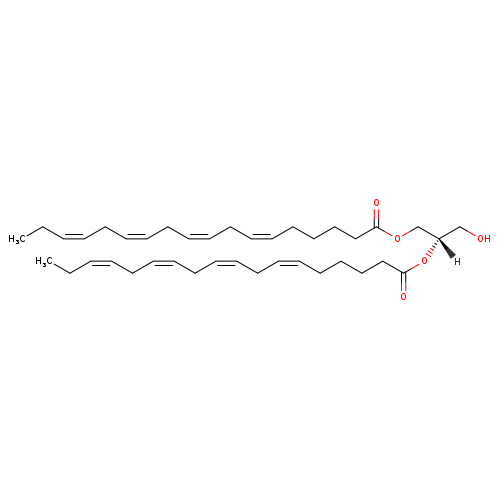 | |||||||||||||||||||||||||||||||||||||||||||||||||||||||||
| Synonyms |
| |||||||||||||||||||||||||||||||||||||||||||||||||||||||||
| Chemical Formula | C39H60O5 | |||||||||||||||||||||||||||||||||||||||||||||||||||||||||
| Average Molecular Weight | 608.8907 | |||||||||||||||||||||||||||||||||||||||||||||||||||||||||
| Monoisotopic Molecular Weight | 608.44407503 | |||||||||||||||||||||||||||||||||||||||||||||||||||||||||
| IUPAC Name | (2S)-1-hydroxy-3-[(6Z,9Z,12Z,15Z)-octadeca-6,9,12,15-tetraenoyloxy]propan-2-yl (6Z,9Z,12Z,15Z)-octadeca-6,9,12,15-tetraenoate | |||||||||||||||||||||||||||||||||||||||||||||||||||||||||
| Traditional Name | diacylglycerol | |||||||||||||||||||||||||||||||||||||||||||||||||||||||||
| CAS Registry Number | Not Available | |||||||||||||||||||||||||||||||||||||||||||||||||||||||||
| SMILES | [H][C@](CO)(COC(=O)CCCC\C=C/C\C=C/C\C=C/C\C=C/CC)OC(=O)CCCC\C=C/C\C=C/C\C=C/C\C=C/CC | |||||||||||||||||||||||||||||||||||||||||||||||||||||||||
| InChI Identifier | InChI=1S/C39H60O5/c1-3-5-7-9-11-13-15-17-19-21-23-25-27-29-31-33-38(41)43-36-37(35-40)44-39(42)34-32-30-28-26-24-22-20-18-16-14-12-10-8-6-4-2/h5-8,11-14,17-20,23-26,37,40H,3-4,9-10,15-16,21-22,27-36H2,1-2H3/b7-5-,8-6-,13-11-,14-12-,19-17-,20-18-,25-23-,26-24-/t37-/m0/s1 | |||||||||||||||||||||||||||||||||||||||||||||||||||||||||
| InChI Key | ZXBDMMYPYQQALX-BJXCJIDGSA-N | |||||||||||||||||||||||||||||||||||||||||||||||||||||||||
| Chemical Taxonomy | ||||||||||||||||||||||||||||||||||||||||||||||||||||||||||
| Description | belongs to the class of organic compounds known as lineolic acids and derivatives. These are derivatives of lineolic acid. Lineolic acid is a polyunsaturated omega-6 18 carbon long fatty acid, with two CC double bonds at the 9- and 12-positions. | |||||||||||||||||||||||||||||||||||||||||||||||||||||||||
| Kingdom | Organic compounds | |||||||||||||||||||||||||||||||||||||||||||||||||||||||||
| Super Class | Lipids and lipid-like molecules | |||||||||||||||||||||||||||||||||||||||||||||||||||||||||
| Class | Fatty Acyls | |||||||||||||||||||||||||||||||||||||||||||||||||||||||||
| Sub Class | Lineolic acids and derivatives | |||||||||||||||||||||||||||||||||||||||||||||||||||||||||
| Direct Parent | Lineolic acids and derivatives | |||||||||||||||||||||||||||||||||||||||||||||||||||||||||
| Alternative Parents | ||||||||||||||||||||||||||||||||||||||||||||||||||||||||||
| Substituents |
| |||||||||||||||||||||||||||||||||||||||||||||||||||||||||
| Molecular Framework | Aliphatic acyclic compounds | |||||||||||||||||||||||||||||||||||||||||||||||||||||||||
| External Descriptors |
| |||||||||||||||||||||||||||||||||||||||||||||||||||||||||
| Ontology | ||||||||||||||||||||||||||||||||||||||||||||||||||||||||||
| Status | Expected but not Quantified | |||||||||||||||||||||||||||||||||||||||||||||||||||||||||
| Origin |
| |||||||||||||||||||||||||||||||||||||||||||||||||||||||||
| Biofunction | Not Available | |||||||||||||||||||||||||||||||||||||||||||||||||||||||||
| Application | Not Available | |||||||||||||||||||||||||||||||||||||||||||||||||||||||||
| Cellular locations |
| |||||||||||||||||||||||||||||||||||||||||||||||||||||||||
| Physical Properties | ||||||||||||||||||||||||||||||||||||||||||||||||||||||||||
| State | Solid | |||||||||||||||||||||||||||||||||||||||||||||||||||||||||
| Experimental Properties |
| |||||||||||||||||||||||||||||||||||||||||||||||||||||||||
| Predicted Properties |
| |||||||||||||||||||||||||||||||||||||||||||||||||||||||||
| Spectra | ||||||||||||||||||||||||||||||||||||||||||||||||||||||||||
| Spectra | ||||||||||||||||||||||||||||||||||||||||||||||||||||||||||
| Biological Properties | ||||||||||||||||||||||||||||||||||||||||||||||||||||||||||
| Cellular Locations |
| |||||||||||||||||||||||||||||||||||||||||||||||||||||||||
| Biospecimen Locations |
| |||||||||||||||||||||||||||||||||||||||||||||||||||||||||
| Pathways |
| |||||||||||||||||||||||||||||||||||||||||||||||||||||||||
| Normal Concentrations | ||||||||||||||||||||||||||||||||||||||||||||||||||||||||||
| ||||||||||||||||||||||||||||||||||||||||||||||||||||||||||
| Abnormal Concentrations | ||||||||||||||||||||||||||||||||||||||||||||||||||||||||||
| Not Available | ||||||||||||||||||||||||||||||||||||||||||||||||||||||||||
| External Links | ||||||||||||||||||||||||||||||||||||||||||||||||||||||||||
| HMDB ID | HMDB0007338 | |||||||||||||||||||||||||||||||||||||||||||||||||||||||||
| DrugBank ID | Not Available | |||||||||||||||||||||||||||||||||||||||||||||||||||||||||
| Phenol Explorer Compound ID | Not Available | |||||||||||||||||||||||||||||||||||||||||||||||||||||||||
| FooDB ID | FDB024531 | |||||||||||||||||||||||||||||||||||||||||||||||||||||||||
| KNApSAcK ID | Not Available | |||||||||||||||||||||||||||||||||||||||||||||||||||||||||
| Chemspider ID | 24766075 | |||||||||||||||||||||||||||||||||||||||||||||||||||||||||
| KEGG Compound ID | Not Available | |||||||||||||||||||||||||||||||||||||||||||||||||||||||||
| BioCyc ID | Not Available | |||||||||||||||||||||||||||||||||||||||||||||||||||||||||
| BiGG ID | Not Available | |||||||||||||||||||||||||||||||||||||||||||||||||||||||||
| Wikipedia Link | Not Available | |||||||||||||||||||||||||||||||||||||||||||||||||||||||||
| METLIN ID | Not Available | |||||||||||||||||||||||||||||||||||||||||||||||||||||||||
| PubChem Compound | 53478167 | |||||||||||||||||||||||||||||||||||||||||||||||||||||||||
| PDB ID | Not Available | |||||||||||||||||||||||||||||||||||||||||||||||||||||||||
| ChEBI ID | Not Available | |||||||||||||||||||||||||||||||||||||||||||||||||||||||||
| References | ||||||||||||||||||||||||||||||||||||||||||||||||||||||||||
| Synthesis Reference | Not Available | |||||||||||||||||||||||||||||||||||||||||||||||||||||||||
| Material Safety Data Sheet (MSDS) | Not Available | |||||||||||||||||||||||||||||||||||||||||||||||||||||||||
| General References | Not Available | |||||||||||||||||||||||||||||||||||||||||||||||||||||||||
Enzymes
- General function:
- Involved in ethanolaminephosphotransferase activity
- Specific function:
- Catalyzes phosphatidylethanolamine biosynthesis from CDP-ethanolamine. It thereby plays a central role in the formation and maintenance of vesicular membranes. Involved in the foramtion of phosphatidylethanolamine via 'Kennedy' pathway (By similarity).
- Gene Name:
- SELENOI
- Uniprot ID:
- Q17QM4
- Molecular weight:
- 45214.0
Reactions
| CDP-Ethanolamine + DG(18:4(6Z,9Z,12Z,15Z)/18:4(6Z,9Z,12Z,15Z)/0:0) → Cytidine monophosphate + PE(18:4(6Z,9Z,12Z,15Z)/18:4(6Z,9Z,12Z,15Z)) | details |
- General function:
- Not Available
- Specific function:
- Catalyzes the terminal and only committed step in triacylglycerol synthesis by using diacylglycerol and fatty acyl CoA as substrates. In contrast to DGAT2 it is not essential for survival. May be involved in VLDL (very low density lipoprotein) assembly. Functions as the major acyl-CoA retinol acyltransferase (ARAT) in the skin, where it acts to maintain retinoid homeostasis and prevent retinoid toxicity leading to skin and hair disorders. In liver, plays a role in esterifying exogenous fatty acids to glycerol.
- Gene Name:
- DGAT1
- Uniprot ID:
- Q8MK44
- Molecular weight:
- 55602.0
Reactions
| DG(18:4(6Z,9Z,12Z,15Z)/18:4(6Z,9Z,12Z,15Z)/0:0) + Clupanodonyl CoA → TG(18:4(6Z,9Z,12Z,15Z)/18:4(6Z,9Z,12Z,15Z)/22:5(7Z,10Z,13Z,16Z,19Z)) + Coenzyme A | details |