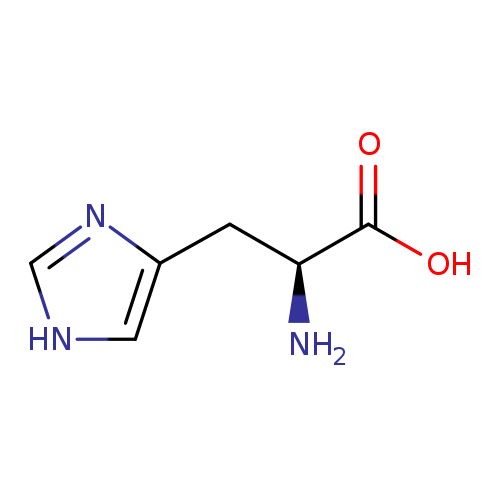
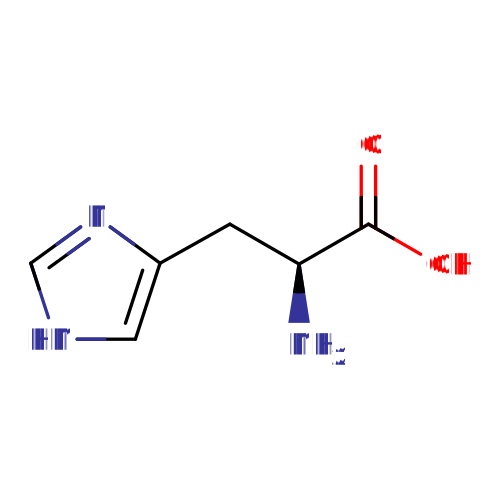
L-Histidine, also known as H, belongs to the class of organic compounds known as histidine and derivatives. Histidine and derivatives are compounds containing cysteine or a derivative thereof resulting from reaction of cysteine at the amino group or the carboxy group, or from the replacement of any hydrogen of glycine by a heteroatom. L-Histidine exists as a solid, possibly soluble (in water), and a very strong basic compound (based on its pKa) molecule. L-Histidine exists in all living species, ranging from bacteria to humans. L-Histidine participates in a number of enzymatic reactions, within cattle. In particular, beta-Alanine and L-histidine can be biosynthesized from carnosine; which is catalyzed by the enzyme Beta-ala-his dipeptidase. Furthermore, L-Histidine and beta-alanine can be converted into carnosine through the action of the enzyme carnosine synthase 1. Finally, beta-Alanine and L-histidine can be biosynthesized from carnosine through the action of the enzyme Beta-ala-his dipeptidase. In cattle, L-histidine is involved in a couple of metabolic pathways, which include the histidine metabolism pathway and the beta-alanine metabolism pathway. L-Histidine is a potentially toxic compound. L-Histidine has been found to be associated with several diseases known as autosomal dominant polycystic kidney disease, perillyl alcohol administration for cancer treatment, pyridoxamine 5-prime-phosphate oxidase deficiency, and epilepsy; also l-histidine has been linked to the inborn metabolic disorders including maple syrup urine disease.
belongs to the class of organic compounds known as histidine and derivatives. Histidine and derivatives are compounds containing cysteine or a derivative thereof resulting from reaction of cysteine at the amino group or the carboxy group, or from the replacement of any hydrogen of glycine by a heteroatom.
Twenty-four hour mean values of the plasma essential amino acids (EAA; histidine, lysine, methionine, phenylalanine, valine, leucine, and isoleucine) and nonessential amino acids (NEAA; alanine, glutamine, glutamic acid, glycine, proline, and tyrosine) are presented in Fig. 1a.
We found significant metabolites in both supervised analyses (p < 0.05 and VIP score > 1) for cows (Taurine, Glutamic acid, Histidine, and PC aa C42:2) and for calves (Carnosine, Alanine, and PC aa C26:0).
Table 3The nutritional composition of oat milk compared with cow's milk.NutrientsComponentCow s milkOat milkCitesAmino acid (mg/100 g)Histidine15.0-26.02.85-3.68(Mickowska et al., 2016; Rafiq et al., 2016; Sterna et al., 2016)
Caseins are particularly rich in essential amino acids such as histidine, methionine, and phenylalanine, whereas whey proteins are distinguished by their elevated concentrations of branched-chain amino acids, specifically leucine, isoleucine, and valine, which play a key role in regulating muscle protein synthesis and metabolic homeostasis [27].
Their amino acidic sequence and structure are responsible for the antioxidant activity, especially tryptophan, tyrosine, histidine, and proline residues [104].
Casein fraction, composition of whey proteins and amino acids profile of cow, buffalo, sheep and goat milk have been presented in Tables 1, 2 and 3, respectively.
In Wagyu crossbred steers, seven blood metabolites (3-hydroxybutyrate, propionate, acetate, creatine, histidine, valine, and isoleucine) were identified to be positively associated with marbling and the number of days the animals on a starch-rich diet [50].
Plasma insulin concentration correlated positively with retinol and negatively with fecal amino acids such as arginine, aspartate, glutamate, histidine, valine, ornithine, choline, acetyl-ornithine, and b-alanine, as well as with fecal VFA such as acetic, propionic, and butyric acids (Table 3, p < 0.01), whereas 3-methylvaleric acid, caproic acid, tridecylic acid, and oleic acid correlated positively with plasmatic insulin concentration.
Our results showed that the metabolites that were suggested by Dervishi et al. [61] as metritis biomarkers, including pantothenate, histidine, xylose, O-phosphocholine, and trans-aconitate, as well as amino acids, tricarboxylic acid cycle metabolites, monosaccharides, and carbohydrate catabolites, were all identified and quantified in Hanwoo steers urine.
A total of 118 metabolites was identified in the urine sample; just 17 metabolites (Acetoin, cholate, gallate, hippurate, histidine, kynurenate, etc.) of them were identified in urine sample (Fig 1 and S2 Table).
Specifically, the concentration of three essential (arginine, glutamine, and histidine) and three non-essential (alanine, aspartic acid, and glutamic acid) amino acids changed over time significantly (P < 0.05), while the concentration of two essential (tryptophan and valine) and three non-essential (asparagine, glycine and serine) amino acids showed a tendency to change (0.05 < P < 0.1), out of the 17 amino acids detected in the uterine fluid.
Written in the paper as “histidine” and “uterine fluid”
The physiological indicators that differed significantly between H1-H4 were lactose in the milk, total protein and lipase in the serum, and the three serum free amino acids histidine, glutamine, and glycine, respectively.
Despite being established metabolites in mature milk, pantothenic acid, ethanol, butyric acid, acetylcholine, acetoacetic acid, glutamine, aspartic acid, dimethyl sulfone, methanol, galactose, cytidine, tyrosine, uracil, tryptophan and histidine were identified and quantified in cow colostrum for the first time.
Written in the paper as “histidine” and “colostrum”
The clinical implications of our research are profound for the dairy industry as the metabolic interplay between NEFA and L-histidine in bovine mammary epithelial cells, particularly the role of 1-Linoleoylglycerophosphocholine, suggests a promising avenue for proactive herd health management.
Written in the paper as “L-histidine” and “mammary epithelial cells”
In the context of dairy farming, L-histidine, along with sodium acetate, can boost b-casein production in nutrient-restricted bovine mammary cells, indicating that L-histidine alone can be beneficial even without additional energy sources [10].
Written in the paper as “L-histidine” and “mammary cells”
Detected in
Mast Cell
Immune cell in tissues that releases histamine and other signals in allergy and inflammation.
When the hoof tissue is affected, damage immune response, allergen, surfactant, and other factors, the histidine stored in the mast cell is decarboxylated and converted into histamine, which is released into the blood circulation, thus affecting the hoof microcirculation [22].
Written in the paper as “histidine” and “mast cell”
The derived organic acid (fumarate and 4-Hydroxybutyrate), amino acids (histidine), sugars (maltose and ribose) and other compounds (caffeine, nicotinate, 4-Hydroxy-3-methoxymandelate and imidazole) were observed only in the ruminal fluid.
Written in the paper as “histidine” and “ruminal fluid”
The most abundant metabolites reported in the literature for bovine testis are glutamate (2-2.4 umol/g), glycine (0.9-1.3 umol/g), and alanine (0.9-1.2 umol/g), while the least abundant compounds are histidine (20 nmol/g), isoleucine (30 nmol/g), leucine (40 nmol/g), valine (50 nmol/g), and lysine (40-200 nmol/g).
Strong and statistically significant correlations were observed for alanine, glutamate, glycine, histidine, isoleucine, leucine, phenylalanine, proline, tryptophan, tyrosine, and valine, highlighting the likelihood that plasma concentrations strongly influence the availability of these amino acids in the uterine lumen.
Written in the paper as “histidine” and “uterine lumen”
Detected in
Whey
Liquid left after milk is curdled and the curds (casein and fat) are removed, as in cheese-making.
Our laboratory observed lower levels of L-histidine in cattle suffering from ketosis, indicating a potential interaction between L-histidine and NEFA metabolism.
Written in the paper as “L-histidine” and “Ketosis”
Zhang et al. (2017) employed a DI/LC-MS/MS-based targeted metabolomics and identified seven serum metabolites (i.e., decanoyl-l-carnitine, histidine, isoleucine, leucine, lysine, acetylornithine, and kynurenine) which were consistently increased during and after the ketosis course.
In the present study, some amino acids, including cystine, histidine, citrulline and alanine, were found to be upregulated in dairy cows with LDA, which indicated that proteolysis was strengthened to remedy the status of excessive NEB.
Written in the paper as “histidine” and “left displacement of the abomasum”
Complementing these findings, a 1H NMR-based metabolomics by Luangwilai et al. (2021) reported increased levels of hippurate, valerate, N-acetylglucosamine, histidine, isoleucine and leucine in the milk of 12 mastitic cows compared to 12 healthy controls, linking these metabolic changes to udder infection.
Written in the paper as “histidine” and “mastitis”
The remaining metabolites that differed at calving in MastitisPost vs. Control cows were distributed over all metabolite families: lower were one conjugated BA precursor (glycine), one water-soluble PL metabolite (glycerylphosphoethanolamine), one AA metabolite carrier (Car C5:0), and two AA metabolites (hippuric acid, indoxylsulfate) and higher were one AA (histidine), one AA metabolite (ketoleucine) and 3'-SL.
Written in the paper as “histidine” and “Mastitis”
Furthermore, the plasma concentrations of four metabolites (sarcosine, methionine, dimethyl sulfone, and L-histidine) were greater (p ≤ 0.05) in healthy steers compared to sick steers.
Written in the paper as “L-histidine” and “Bovine Respiratory Disease”
Concentrations of glucogenic amino acids including alanine, glutamate, glutamine, histidine, and phenylalanine typically decline due to increased hepatic gluconeogenic demand, while altered lysine catabolism is reflected by elevated 2-piperidinecarboxylic acid [117,118].
Written in the paper as “histidine” and “clinical ketosis”
Using untargeted nuclear magnetic resonance spectroscopy (1H-NMR), Luangwilai et al. (13) found that acetate, alanine, benzoate, b-hydroxybutyrate, formate, hippurate, histidine, isoleucine, lactate, leucine, N-acetylamino acid, phenylalanine, threonine, valerate, and valine contents in milk significantly increased in mastitic cows selected by the result of CMT.
Written in the paper as “histidine” and “Clinical mastitis”
First of all, the experiment found that the serum level of glucose, tyrosine, histidine, alanine, succinate, and citrate was decreased in dairy cows with IO.
Written in the paper as “histidine” and “Inactive ovaries”
In ketotic cattle, L-histidine levels are lower compared to healthy counterparts, highlighting its importance; L-histidine is crucial for various proteins, and its deficiency may result in reduced body weight [8].
Written in the paper as “L-histidine” and “ketotic”
In the second panel increased levels of histidine, lysine, xylose, O-phosphocholine, threonine, trans-aconitate, isocitrate, and 3-aminoisobutyrate were found in pre-metritic cows at 4 weeks before parturition.
Written in the paper as “histidine” and “metritis”
A disease of pregnant and lactating cows and ewes leading to generalized paresis and death. The disease, which is characterized by hypocalcemia, occurs at or shortly after parturition in cows and within weeks before or after parturition in ewes.
Marczuk et al. (2018) found that higher concentrations of glutamine, glutamic acid, isoleucine, and tyrosine in cows with primary ketosis, and that significant decrease in the concentrations of asparagine, histidine, methionine, and serine, alanine, leucine, lysine, and proline.
Written in the paper as “histidine” and “primary ketosis”
Notably, mHSY appeared to reverse the downregulated amino acid metabolism observed in cows with SCM, such as methionine, histidine, tryptophan and arginine, essential for milk protein production (51).
Written in the paper as “histidine” and “subclinical mastitis”
The increased excretion of acylcarnitines and clearance of several amino acids, such as valine, leucine, isoleucine, histidine, methyl-histidine, arginine, as well as choline and betaine, might contribute to a systemic inflammatory response triggered by a subclinical udder infection.
Written in the paper as “histidine” and “subclinical udder infection”
All of the relevant pathways were upregulated in steers fed monensin due to increased concentrations of the associated metabolites: phenylalanine, histidine, and linoleic acid.
Written in the paper as “histidine” and “histidine metabolism”
While the HAL gene was found in both gene ontology terms and KEGG pathways, histidine metabolism is a limiting factor for milk protein synthesis, and it may be the first limiting amino acid for growth in animals (cattle, poultry, fish and humans) [64].
Written in the paper as “histidine” and “histidine metabolism”
Histidine is known to decarboxylate to form histamine under the action of histidine decarboxylase, then forms N-acetylhistamine under the action of transferases (Dempsey et al., 2015).
Written in the paper as “Histidine” and “histidine metabolism”
Increased plasma histidine activates hepatic STAT3, suppressing hepatic glucose production (HGP) in type 2 diabetes by inhibiting gluconeogenic enzymes and enhancing insulin s effect, an action independent of central insulin signaling but reliant on central histamine pathways, revealing a novel target for diabetes treatment [27].
Written in the paper as “Histidine” and “hepatic glucose production”
In the present study, amino acids, including glycine, asparagine, glutamate, threonine, proline, valine, methionine, isoleucine, and histidine, were down-regulated in the HS group, pointing to increased conversion of these metabolites into glucose to maintain homeostasis and supply energy during periods of NEB in dairy cows [22].
Written in the paper as “histidine” and “gluconeogenesis”
It has been reported that tyrosine, histidine, and alanine as glycogenic amino acids usually supply energy directly by TCA in mammals (33) and can also be converted into glucose (Glu) for energy supply by gluconeogenesis in the liver of dairy cows under negative energy balance (34).
Written in the paper as “histidine” and “gluconeogenesis”
Four amino acids, namely, histidine, lysine, methionine, and leucine, are the main limiting essential amino acids involved in regulating milk protein synthesis via mTOR [24].
Written in the paper as “histidine” and “milk protein synthesis”
Notably, histidine, valine and methionine are reported to induce milk protein synthesis in mammary gland epithelial cells via the mTOR signalling pathway (Gao et al., 2015; Zhou et al., 2018).
Written in the paper as “histidine” and “milk protein synthesis”
Histidine is a limiting amino acid during lactation that affects milk production and milk protein synthesis in cows [30], and in the serum free amino acid results, the histidine content in H1 was significantly lower than in the later multiparity, which means that more attention should be paid to dietary protein supplementation or additional limiting amino acids in the feeding management to meet the metabolic requirements of primiparous dairy cows [31].
Written in the paper as “Histidine” and “milk protein synthesis”
KEGG enzymes mediating the biosynthesis of amino acids (isoleucine, leucine, valine, histidine, and arginine), of C5-branched dibasic acid (itaconate), and key cofactors and vitamins (coenzyme A, vitamin B12 coenzyme, and s-adenosylmethionine) were also significantly enriched in LH cows (LDA > 2, P < 0.05; Fig. 5B and Table S10).
Written in the paper as “histidine” and “biosynthesis of amino acids”
Metabolites related to bacterial synthesis of amino acids (i.e., histidine, acetyl-ornithine, and arginine) were lower in the feces of heat-stressed cows.
Written in the paper as “histidine” and “bacterial synthesis of amino acids”
In addition, alterations in the amino acid metabolism were identified, indicated by increases in the concentrations of histidine, serine, phenylalanine, alanine, and threonine.
Written in the paper as “histidine” and “amino acid metabolism”
Metabolites, including glycine, asparagine, glutamate, threonine, proline, valine, methionine, isoleucine, and histidine, involved in amino acid metabolism were down-regulated 0.63- to 0.78-fold in the HS group as compared with the non-HS group (p<0.01), with the exception of leucine, urea, and creatinine, which were upregulated 1.24- to 1.70-fold (p<0.01).
Written in the paper as “histidine” and “amino acid metabolism”
The chemical reactions and pathways resulting in the formation of nitric oxide, nitrogen monoxide (NO), a colorless gas only slightly soluble in water.
On a molecular level, histidine supplementation restructured liver metabolism, enhancing antioxidant defenses and nitric oxide synthesis while elevating key amino acids and glutathione levels [29].
Written in the paper as “Histidine” and “nitric oxide synthesis”
The presence of histidine enhances endogenous nitric oxide synthesis by promoting the circulating bioavailability of arginine, thereby bolstering hepatic resistance against oxidative stress [43].
Written in the paper as “Histidine” and “endogenous nitric oxide synthesis”
The chemical reactions and pathways resulting in the formation of histamine, a physiologically active amine, found in plant and animal tissue and released from mast cells as part of an allergic reaction in humans.
Histidine plays a vital role in various bodily functions, including serving as a precursor for histamine synthesis, metal chelation, pH buffering, and immune function [60].
Written in the paper as “histidine” and “histamine synthesis”
This acidic environment acts as a potent stressor, triggering the lysis of Gram-negative bacteria, the subsequent release of cell wall components, specifically LPS, and the formation of biogenic amines such as histamine via the decarboxylation of histidine [144].
Written in the paper as “histidine” and “decarboxylation of histidine”
Several amino acids involved in protein metabolism also decreased with time including proline, leucine, isoleucine, histidine, carnosine, allantoin and aspartate.
Written in the paper as “histidine” and “protein metabolism”
Some examples of sodium-independent AA transporters are SLC7A5 (CD98LC, 4F2 light chain, LAT1, MPE16) and SLC3A2 (4F2 cell-surface antigen heavy chain, 4F2hc, MDU1), both of which function as high-affinity transporters that mediate the uptake of large, neutral AAs, such as tryptophan (Trp), phenylalanine (Phe), leucine (Leu), and histidine (His) [3].
Written in the paper as “histidine” and “amino acid absorption”
The directed movement of amino acids, organic acids containing one or more amino substituents, into, out of or within a cell, or between cells, by means of some agent such as a transporter or pore.
The protein SLC38A7 on the cell membrane in the central nervous system transports not only L-Gln, but also L-His and L-Ala [74].
Written in the paper as “L-His” and “amino acid transport”
Involved in
antioxidant activity
Inhibition of the reactions brought about by dioxygen (O2) or peroxides. Usually the antioxidant is effective because it can itself be more easily oxidized than the substance protected. The term is often applied to components that can trap free radicals, thereby breaking the chain reaction that normally leads to extensive biological damage.
On a molecular level, histidine supplementation restructured liver metabolism, enhancing antioxidant defenses and nitric oxide synthesis while elevating key amino acids and glutathione levels [29].
Written in the paper as “Histidine” and “antioxidant defenses”
In addition, through aspartate and glutamate metabolism, downregulated isocitrate in the citrate cycle was associated with downregulated histidine, uracil, and riboflavin in b-alanine metabolism, pyrimidine metabolism, and riboflavin metabolism, respectively.
Written in the paper as “histidine” and “b-alanine metabolism”
Gao et al. found that cultivation with standard medium devoid of all AA and supplemented with histidine, lysine, methionine, and leucine for 6-h had different effects on b-casein synthesis11, respectively.
Written in the paper as “histidine” and “b-casein synthesis”
On the other hand, when lactic acid accumulates in the rumen and the pH value falls below 4.5, histidine decarboxylates under the action of bacterial decomposition, producing a large amount of histamine, which acts on the hoof dermis through body fluid circulation to make capillary permeability.
Written in the paper as “histidine” and “bacterial decomposition”
Increased plasma histidine activates hepatic STAT3, suppressing hepatic glucose production (HGP) in type 2 diabetes by inhibiting gluconeogenic enzymes and enhancing insulin s effect, an action independent of central insulin signaling but reliant on central histamine pathways, revealing a novel target for diabetes treatment [27].
Written in the paper as “Histidine” and “central histamine pathways”
Inhibits
cytokine production involved in inflammatory response GO:0002534
The synthesis or release of a cytokine following a inflammatory stimulus as part of an inflammatory response, resulting in an increase in its intracellular or extracellular levels.
Polyamines, derived from decarboxylation of amino acids such as arginine, histidine, and lysine by the gut microbiota, also play an essential role in immune regulation and intestinal physiology [8,9].
Written in the paper as “histidine” and “decarboxylation of amino acids”
L-histidine is a vital amino acid involved in proton buffering, metal ion chelation, antioxidant activity, erythropoiesis, and histamine-related processes [25].
Written in the paper as “L-histidine” and “erythropoiesis”
Involved in
generation of precursor metabolites and energy GO:0006091
The chemical reactions and pathways resulting in the formation of precursor metabolites, substances from which energy is derived, and any process involved in the liberation of energy from these substances.
In human pneumonia, six metabolites (uric acid, L-histidine, hypoxanthine, glutamic acid, L-tryptophan and ADP) have been identified as markers related to the host response to infection through energy metabolism and inflammatory and antimicrobial pathways23.
Written in the paper as “L-histidine” and “energy metabolism”
The process whose specific outcome is the progression of the myeloid and lymphoid derived organ/tissue systems of the blood and other parts of the body over time, from formation to the mature structure. The site of hemopoiesis is variable during development, but occurs primarily in bone marrow or kidney in many adult vertebrates.
Concentrations of glucogenic amino acids including alanine, glutamate, glutamine, histidine, and phenylalanine typically decline due to increased hepatic gluconeogenic demand, while altered lysine catabolism is reflected by elevated 2-piperidinecarboxylic acid [117,118].
Written in the paper as “histidine” and “hepatic gluconeogenic demand”
L-histidine is a vital amino acid involved in proton buffering, metal ion chelation, antioxidant activity, erythropoiesis, and histamine-related processes [25].
Written in the paper as “L-histidine” and “histamine-related processes”
The directed movement of histidine, 2-amino-3-(1H-imidazol-4-yl)propanoic acid, into, out of or within a cell, or between cells, by means of some agent such as a transporter or pore.
(A) The histidine transporter (HisPMQJ), arginine transporter (ArtJ-ArtPIQM), arginine/ornithine transporter (AotJ, Q, M and P), and riboflavin transporter (RfuABCD) were involved in translocation of histidine, arginine, arginine/ornithine, and riboflavin, respectively.
Written in the paper as “histidine” and “translocation of histidine”
Histidine plays a vital role in various bodily functions, including serving as a precursor for histamine synthesis, metal chelation, pH buffering, and immune function [60].
Written in the paper as “histidine” and “immune function”
Among the identified FAAs, the levels of phenylalanine, histidine and taurine, which are essential amino acids for infant growth, were significantly higher in FM than those in HM.
Written in the paper as “histidine” and “infant growth”
In human pneumonia, six metabolites (uric acid, L-histidine, hypoxanthine, glutamic acid, L-tryptophan and ADP) have been identified as markers related to the host response to infection through energy metabolism and inflammatory and antimicrobial pathways23.
Written in the paper as “L-histidine” and “inflammatory and antimicrobial pathways”
The immediate defensive reaction (by vertebrate tissue) to infection or injury caused by chemical or physical agents. The process is characterized by local vasodilation, extravasation of plasma into intercellular spaces and accumulation of white blood cells and macrophages.
In addition, the amino acids in animal skin, including tryptophan, tyrosine and histidine, are particularly susceptible to light- mediated oxidation and eventually invoke significant inflammatory responses in affected tissues and blood vessels that can lead to animal tissue necrosis [15,19].
Written in the paper as “histidine” and “inflammatory responses”
The HAL gene was found in gene ontology and has an effect on amino acid metabolism in animals and humans; dietary histidine is related to factors that improve metabolic syndrome and affect ion absorption in human populations.
Written in the paper as “histidine” and “ion absorption”
In addition, the amino acids in animal skin, including tryptophan, tyrosine and histidine, are particularly susceptible to light- mediated oxidation and eventually invoke significant inflammatory responses in affected tissues and blood vessels that can lead to animal tissue necrosis [15,19].
Written in the paper as “histidine” and “light-mediated oxidation”
The biological functions of histidine encompass its role as an antioxidant and scavenger of free radicals, contributing to hepatic protection by promoting metabolic homeostasis.
Written in the paper as “Histidine” and “metabolic homeostasis”
Involved in
metal chelation
The formation of bonds from two or more atoms within the same ligand to a metal atom in complexes in which the metal is part of a ring.
Histidine plays a vital role in various bodily functions, including serving as a precursor for histamine synthesis, metal chelation, pH buffering, and immune function [60].
Written in the paper as “histidine” and “metal chelation”
Notably, mHSY appeared to reverse the downregulated amino acid metabolism observed in cows with SCM, such as methionine, histidine, tryptophan and arginine, essential for milk protein production (51).
Written in the paper as “histidine” and “milk protein production”
Notably, histidine, valine and methionine are reported to induce milk protein synthesis in mammary gland epithelial cells via the mTOR signalling pathway (Gao et al., 2015; Zhou et al., 2018).
Written in the paper as “histidine” and “mTOR signalling pathway”
The directed movement of neutral amino acids, amino acids with no net charge, into, out of or within a cell, or between cells, by means of some agent such as a transporter or pore.
L-type neutral amino acid transporter 1 (LAT1) is a heterodimeric membrane transport protein involved in the uptake of neutral amino acids such as leucine, isoleucine, valine, phenylalanine, tyrosine, tryptophan, methionine, and histidine [98].
Written in the paper as “histidine” and “uptake of neutral amino acids”
Consumed by
nonoxidative deamination of histidine to urocanic acid
The HAL gene located on bovine chromosome (BTA) 5 encodes a cytosolic enzyme known as histidase or histidinase, which catalyzes the first reaction of histidine catabolism, the nonoxidative deamination of histidine to urocanic acid [14].
Written in the paper as “histidine” and “nonoxidative deamination of histidine to urocanic acid”
Histidine plays a vital role in various bodily functions, including serving as a precursor for histamine synthesis, metal chelation, pH buffering, and immune function [60].
Written in the paper as “histidine” and “pH buffering”
A process in which a series of electron carriers operate together to transfer electrons from donors such as NADH and FADH2 to any of several different terminal electron acceptors to generate a transmembrane electrochemical gradient.
Certain types of ABC transporters accelerate the electron production in bacteria by facilitating the transport of amino acids such as histidine that is involved in EET [21], assisting the process of electron generation.
Written in the paper as “histidine” and “electron transfer”
It has been reported that tyrosine, histidine, and alanine as glycogenic amino acids usually supply energy directly by TCA in mammals (33) and can also be converted into glucose (Glu) for energy supply by gluconeogenesis in the liver of dairy cows under negative energy balance (34).
Written in the paper as “histidine” and “trichloroacetic acid”
The chemical reactions and pathways by which the various amino acids become bonded to their corresponding tRNAs. The most common route for synthesis of aminoacyl tRNA is by the formation of an ester bond between the 3'-hydroxyl group of the most 3' adenosine of the tRNA and the alpha carboxylic acid group of an amino acid, usually catalyzed by the cognate aminoacyl-tRNA ligase. A given aminoacyl-tRNA ligase aminoacylates all species of an isoaccepting group of tRNA molecules.
A total of 14 metabolites (alanine, asparagine, aspartic acid, glycine, isoleucine, leucine, lysine, methionine, phenylalanine, proline, serine, threonine, tyrosine, and valine) from amino acids and three other metabolites (histidine, glutamine, and tryptophan) comprised the aminoacyl-tRNA biosynthesis pathway in our study.
Written in the paper as “histidine” and “aminoacyl-tRNA biosynthesis”
Accordingly, Lee et al. emphasized that providing RP-Lys, RPM, and histidine in combination significantly increased milk protein yield in dairy cows fed a diet deficient in metabolizable protein [106].
Written in the paper as “histidine” and “milk protein yield”
Histidine is the first-limiting amino acid for milk protein synthesis in dairy cows, the infusion of which was related to significant increases in milk and milk protein yields [15].
Written in the paper as “histidine” and “milk protein yield”
While there is no apparent connection between histidine and NEFA, Vanhatalo et al. [26] found that histidine significantly increases the milk and milk protein yield during lactation, but at the same time decreases its lactose and fat contents.
Written in the paper as “histidine” and “milk protein yield”
Histidine is the first-limiting amino acid for milk protein synthesis in dairy cows, the infusion of which was related to significant increases in milk and milk protein yields [15].
Written in the paper as “histidine” and “milk yield”
While there is no apparent connection between histidine and NEFA, Vanhatalo et al. [26] found that histidine significantly increases the milk and milk protein yield during lactation, but at the same time decreases its lactose and fat contents.
Written in the paper as “histidine” and “milk yield”
Dodecenoylcarnitine (C12:1), histidine, creatinine, C3:1, C16:1OH were the top five metabolites that were able to distinguish cows in the high or low RFI categories.
Written in the paper as “histidine” and “residual feed intake”
Of the seven amino acids (L-tryptophan, L-arginine, L-phenylalanine, L-valine, L-kynurenine, L-histidine, and creatine), six were lower in HE cows compared with LE cows (Figure 2).
Written in the paper as “L-histidine” and “residual feed intake”
In Wagyu crossbred steers, seven blood metabolites (3-hydroxybutyrate, propionate, acetate, creatine, histidine, valine, and isoleucine) were identified to be positively associated with marbling and the number of days the animals on a starch-rich diet [50].
Written in the paper as “histidine” and “marbling”
The metabolites 3-Hydroxybutyrate, acetate, histidine, isobutyrate, methyl histidine and valine showed a positive association (P < 0.05) with marbling at day 432 however there was no apparent association at day 196 (Table 5).
Written in the paper as “histidine” and “marbling”
Histidine is a limiting amino acid during lactation that affects milk production and milk protein synthesis in cows [30], and in the serum free amino acid results, the histidine content in H1 was significantly lower than in the later multiparity, which means that more attention should be paid to dietary protein supplementation or additional limiting amino acids in the feeding management to meet the metabolic requirements of primiparous dairy cows [31].
Written in the paper as “Histidine” and “milk production”
Similar positive correlations were found between Aus-Meat marble score and the relative concentration of those metabolites although valine also reached significance (P < 0.05).
Written in the paper as “histidine” and “Aus-Meat marble score”
The metabolites within the numerous pathways that were associated with follicular fluid progesterone or weight are primarily involved in the citric acid cycle.
Any measurable or observable characteristic related to the process whereby food (i.e. material, usually of plant or animal origin, that contains essential nutrients such as carbohydrates, fats, proteins, vitamins, and/or minerals and that is ingested and assimilated by an organism to produce energy, stimulate growth, and maintain life) is taken in for utilization by the body.
In the context of dairy farming, L-histidine, along with sodium acetate, can boost b-casein production in nutrient-restricted bovine mammary cells, indicating that L-histidine alone can be beneficial even without additional energy sources [10].
Written in the paper as “L-histidine” and “b-casein production”
While there is no apparent connection between histidine and NEFA, Vanhatalo et al. [26] found that histidine significantly increases the milk and milk protein yield during lactation, but at the same time decreases its lactose and fat contents.
Written in the paper as “histidine” and “fat contents”
The proportion, quantity, or volume in milk of lactose, the major sugar found in colostrum and milk; it is composed of one molecule of glucose and one molecule of galactose.
For instance, changes in the diet (increase grain/decrease fiber) reduces the ruminal biohydrogenation of polyunsaturated fatty acids (PUFAs), altered the concentration of intermediate fatty acids29, and decreased the levels of ruminal histidine and tyrosine6.
For instance, changes in the diet (increase grain/decrease fiber) reduces the ruminal biohydrogenation of polyunsaturated fatty acids (PUFAs), altered the concentration of intermediate fatty acids29, and decreased the levels of ruminal histidine and tyrosine6.
Histidine can be first-limiting for growth; in cattle fed maize silage, the ruminal and dietary supply was insufficient to maintain growth in young bulls [36].
Written in the paper as “Histidine” and “maize silage”
In Wagyu crossbred steers, seven blood metabolites (3-hydroxybutyrate, propionate, acetate, creatine, histidine, valine, and isoleucine) were identified to be positively associated with marbling and the number of days the animals on a starch-rich diet [50].
Written in the paper as “histidine” and “starch-rich diet”
Putative metabolic pathways significantly (P < 0.05) affected by toxic tall fescue (E+) in the plant and animal throughout the 28-day grazing trial are presented.
Written in the paper as “histidine” and “toxic tall fescue”
Histidine plays a vital role in various bodily functions, including serving as a precursor for histamine synthesis, metal chelation, pH buffering, and immune function [60].
Written in the paper as “histidine” and “precursor”
More specifically, phenylalanine accumulates due to impaired hydroxylation under oxidative stress (Neurauter et al., 2008), while histidine serves as a precursor for histamine, an inflammatory mediator, indicating immune cell activation and nitrogen mobilization (Holecek, 2020).
Written in the paper as “histidine” and “precursor”
Evidence indicates histidine works as a precursor for carnosine and anserine, dipeptides exhibiting potent intracellular buffering capacity, while concurrently functioning as a biomarker for type II fast-twitch muscle fibers (Abe 2000; Seong et al. 2015).
Written in the paper as “histidine” and “precursor”
Being an essential amino acid, histidine is not only the precursor of intermediates of the tricarboxylic acid cycle but also a substrate for histamine and carnosine biosynthesis as an inflammatory agent (20).
Written in the paper as “histidine” and “precursor”
The biological functions of histidine encompass its role as an antioxidant and scavenger of free radicals, contributing to hepatic protection by promoting metabolic homeostasis.
Written in the paper as “Histidine” and “antioxidant”
Therefore, the decreased level of histidine found in the infertile heifer s blood plasma was of particular interest due to its well described antioxidant and anti-inflammatory functions37,38.
Written in the paper as “histidine” and “antioxidant”
HIS in the rumen is derived from Allisonella histaminiformans, which is able to grow in environments containing histidine and utilizes histidine as its only energy source 37.
Written in the paper as “histidine” and “energy source”
Therefore, the decreased level of histidine found in the infertile heifer s blood plasma was of particular interest due to its well described antioxidant and anti-inflammatory functions37,38.
Written in the paper as “histidine” and “anti-inflammatory functions”
L-histidine is a vital amino acid involved in proton buffering, metal ion chelation, antioxidant activity, erythropoiesis, and histamine-related processes [25].
Written in the paper as “L-histidine” and “antioxidant activity”
The increased histidine, an electron donor [44], arginine, a pH regulator [45], and riboflavin, an electron amplifier [46, 47], may facilitate the survival or bioelectricity of L. mesenteroides during electro-fermentation.
Written in the paper as “histidine” and “electron donor”
Has
first-limiting amino acid for milk protein synthesis
Histidine is the first-limiting amino acid for milk protein synthesis in dairy cows, the infusion of which was related to significant increases in milk and milk protein yields [15].
Written in the paper as “histidine” and “first-limiting amino acid for milk protein synthesis”
The profiles of Lys and His, which are considered limiting AA in some dairy cattle studies, were not affected by RPM feeding, although there was a tendency for plasma His to vary during the day.
Written in the paper as “Histidine” and “limiting amino acid”
L-histidine is a vital amino acid involved in proton buffering, metal ion chelation, antioxidant activity, erythropoiesis, and histamine-related processes [25].
Written in the paper as “L-histidine” and “metal ion chelation”
The rumen microorganisms can use the accumulated SCFAs as carbon sources and nitrogen compounds (such as ammonia) as nitrogen sources to resynthesize amino acids, resulting in an enrichment in the precursors of biogenic amines (L-histidine, L-arginine, L-lysine, and L-tryptophan) in the rumen [80,81,82].
Written in the paper as “L-histidine” and “precursors of biogenic amines”
L-histidine is a vital amino acid involved in proton buffering, metal ion chelation, antioxidant activity, erythropoiesis, and histamine-related processes [25].
Written in the paper as “L-histidine” and “proton buffering”
The biological functions of histidine encompass its role as an antioxidant and scavenger of free radicals, contributing to hepatic protection by promoting metabolic homeostasis.
Written in the paper as “Histidine” and “scavenger of free radicals”
Their amino acidic sequence and structure are responsible for the antioxidant activity, especially tryptophan, tyrosine, histidine, and proline residues [104].
Written in the paper as “histidine” and “reactive oxygen species scavenger”
Being an essential amino acid, histidine is not only the precursor of intermediates of the tricarboxylic acid cycle but also a substrate for histamine and carnosine biosynthesis as an inflammatory agent (20).
Written in the paper as “histidine” and “substrate”
Aurelio Luigi; Brownlee Robert T C; Hughes Andrew B A novel synthesis of N-methyl asparagine, arginine, histidine, and tryptophan. Organic letters (2002), 4(21), 3767-9.
Material Safety Data Sheet (MSDS)
Not Available
General References
Mung D, Li L: Development of Chemical Isotope Labeling LC-MS for Milk Metabolomics: Comprehensive and Quantitative Profiling of the Amine/Phenol Submetabolome. Anal Chem. 2017 Apr 18;89(8):4435-4443. doi: 10.1021/acs.analchem.6b03737. Epub 2017 Mar 28. [PubMed:28306241 ]
Mung D, Li L: Applying quantitative metabolomics based on chemical isotope labeling LC-MS for detecting potential milk adulterant in human milk. Anal Chim Acta. 2018 Feb 25;1001:78-85. doi: 10.1016/j.aca.2017.11.019. Epub 2017 Nov 14. [PubMed:29291809 ]
Kurt J. Boudonck, Matthew W. Mitchell, Jacob Wulff and John A. Ryals (2009). Kurt J. Boudonck, Matthew W. Mitchell, Jacob Wulff and John A. Ryals. Characterization of the biochemical variability of bovine milk using metabolomics. Metabolomics (2009) 5:375?386. Metabolomics.
A. Foroutan et al. (2019). A. Foroutan et al. The Chemical Composition of Commercial Cow's Milk (in preparation). Journal of Agricultural and Food Chemistry.
Fooddata+, The Technical University of Denmark (DTU) [Link]
Arginine methyltransferase that can catalyze the formation of both omega-N monomethylarginine (MMA) and asymmetrical dimethylarginine (aDMA), with a strong preference for the formation of aDMA. Preferentially methylates arginyl residues present in a glycine and arginine-rich domain and displays preference for monomethylated substrates. Specifically mediates the asymmetric dimethylation of histone H3 'Arg-2' to form H3R2me2a. H3R2me2a represents a specific tag for epigenetic transcriptional repression and is mutually exclusive with methylation on histone H3 'Lys-4' (H3K4me2 and H3K4me3). Acts as a transcriptional repressor of various genes such as HOXA2, THBS1 and TP53 (By similarity). Repression of TP53 blocks cellular senescence (By similarity). Also methylates histone H2A and H4 'Arg-3' (H2AR3me and H4R3me, respectively). Acts as a regulator of DNA base excision during DNA repair by mediating the methylation of DNA polymerase beta (POLB), leading to the stimulation of its polymerase activity by enhancing DNA binding and processivity. Methylates HMGA1. Regulates alternative splicing events. Acts as a transcriptional coactivator of a number of steroid hormone receptors including ESR1, ESR2, PGR and NR3C1. Promotes fasting-induced transcriptional activation of the gluconeogenic program through methylation of the CRTC2 transcription coactivator. Methylates GPS2, protecting GPS2 from ubiquitination and degradation. Methylates SIRT7, inhibiting SIRT7 histone deacetylase activity and promoting mitochondria biogenesis (By similarity).
Hydrolyzes a variety of dipeptides including L-carnosine but has a strong preference for Cys-Gly. Catalyzes the production of N-lactoyl-amino acids from lactate and amino acids by reverse proteolysis.
Required for the control of apoptosis during postnatal growth. Essential for proteolytic processing of an antiapoptotic form of OPA1 which prevents the release of mitochondrial cytochrome c in response to intrinsic apoptotic signals (By similarity). Required for the maturation of PINK1 into its 52kDa mature form after its cleavage by mitochondrial-processing peptidase (MPP). Promotes changes in mitochondria morphology regulated by phosphorylation of P-beta domain (By similarity).
Hydrolyzes purine nucleotide phosphoramidates with a single phosphate group, including adenosine 5'monophosphoramidate (AMP-NH2), adenosine 5'monophosphomorpholidate (AMP-morpholidate) and guanosine 5'monophosphomorpholidate (GMP-morpholidate). Hydrolyzes lysyl-AMP (AMP-N-epsilon-(N-alpha-acetyl lysine methyl ester)) generated by lysine tRNA ligase, as well as Met-AMP, His-AMP and Asp-AMP, lysyl-GMP (GMP-N-epsilon-(N-alpha-acetyl lysine methyl ester)) and AMP-N-alanine methyl ester. Can also convert adenosine 5'-O-phosphorothioate and guanosine 5'-O-phosphorothioate to the corresponding nucleoside 5'-O-phosphates with concomitant release of hydrogen sulfide. In addition, functions as scaffolding protein that modulates transcriptional activation by the LEF1/TCF1-CTNNB1 complex and by the complex formed with MITF and CTNNB1. Modulates p53/TP53 levels and p53/TP53-mediated apoptosis. Modulates proteasomal degradation of target proteins by the SCF (SKP2-CUL1-F-box protein) E3 ubiquitin-protein ligase complex (By similarity).
Catalyzes the ATP-dependent ligation of histidine to the 3'-end of its cognate tRNA, via the formation of an aminoacyl-adenylate intermediate (His-AMP). Plays a role in axon guidance.
Mitochondrial aminoacyl-tRNA synthetase that catalyzes the ATP-dependent ligation of histidine to the 3'-end of its cognate tRNA, via the formation of an aminoacyl-adenylate intermediate (His-AMP).
Functions as a sodium-dependent amino acid transporter which countertransport protons. Mediates the saturable, pH-sensitive, and electrogenic cotransport of several neutral amino acids including glycine, asparagine, alanine, serine, glutamine and histidine with sodium (By similarity).