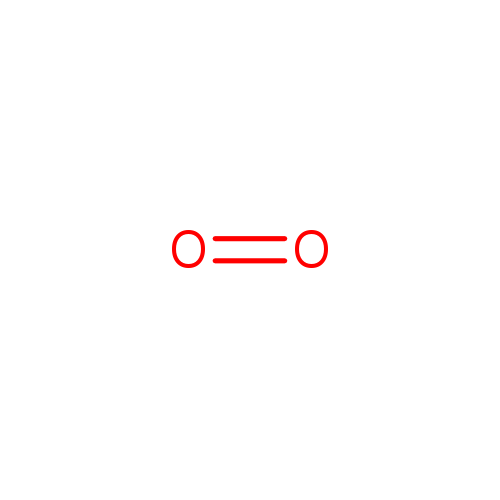
Oxygen, also known as dioxygene or O2, belongs to the class of inorganic compounds known as other non-metal oxides. These are inorganic compounds containing an oxygen atom of an oxidation state of -2, in which the heaviest atom bonded to the oxygen belongs to the class of 'other non-metals'. Oxygen exists in all living species, ranging from bacteria to plants to humans. In cattle, oxygen is involved in the metabolic pathway called the arachidonic acid metabolism pathway. Based on a literature review a significant number of articles have been published on Oxygen.
belongs to the class of inorganic compounds known as other non-metal oxides. These are inorganic compounds containing an oxygen atom of an oxidation state of -2, in which the heaviest atom bonded to the oxygen belongs to the class of 'other non-metals'.
One of the yeast s crucial functions is oxygen scavenging, which lowers the amount of oxygen in the rumen and increases the survival of other anaerobic microorganisms (Fonty, 2006; Sirisan et al., 2013).
Concurrently, the inclusion of live yeasts (Saccharomyces cerevisiae) serves as a well-established strategy to stabilize ruminal pH under dietary challenges; and live yeasts actively consume oxygen within the rumen, creating a strictly anaerobic environment that stimulates the growth of lactic acid-utilizing bacteria and cellulolytic species, thereby minimizing the risk of subacute ruminal acidosis and enhancing fiber digestion [15].
This correlates with recorded oxygen depletion rates within the rumen, for example [49] determined oxygen levels in grass boluses to be 5.8 mg O2/L upon mastication, reducing to 0.05 mg O2/L over a period of 10 min, which was further lowered in the presence of ruminal microbes which consume O2 [16].
The concentration of hemoglobin in cows of the III and IV experimental groups compared with the base analogs also increased significantly (p < 0.05) by 6.21 g/l (5.44 ) and 5.70 g/l (5.00 ), which shows a better transport of amino acids and oxygen into their body.
The primary physiological function of the respiratory tract is to conduct gas exchange (inhalation of oxygen for the exchange and exhalation of carbon dioxide) from the blood.
Differences in BO2 (blood oxygen), p50 (hemoglobin-oxygen affinity), ctO2 (total oxygen concentration), and sO2 (saturation) values in cows at different production levels.
Additionally, Bacillus subtilis consume oxygen in the gastrointestinal tract, forming an anaerobic microenvironment that facilitates the colonization and proliferation of beneficial anaerobic bacteria within the gut [9].
Written in the paper as “oxygen” and “gastrointestinal tract”
Facultative anaerobes can initially consume oxygen and create conditions favourable to strict anaerobes, while milk supplies lactose, fat, protein and host-derived bioactive compounds.
Written in the paper as “oxygen” and “gastrointestinal tract”
The rumen has long been considered to be strictly anoxic, implying that conventional aerobic methanotrophs could play only a minimal or no active role, limited to the micro-oxic microenvironments adjacent to the rumen wall (where a small amount of oxygen diffuses from the bloodstream) (Kazda et al., 2014; Greening et al., 2019; Bhagat et al., 2023; McAllister et al., 2025).
Written in the paper as “oxygen” and “bloodstream”
Detected in
Breath
Air breathed out, which carries volatile compounds from the lungs and, in cattle, gases from rumen fermentation.
A breath analysis device (Veterinary Metabolism System, Relitech, the Netherlands) was used to measure the concentrations of O2, CO2 and CH4 (vol ) in excess air sampled from the concentrate feeder with a flow of 200 L/min (+ 50 L/min).
This pattern may be explained by several factors: (i) the aerobic-anaerobic succession theory of early colonization, whereby facultative anaerobes (e.g., Escherichia coli) initially colonize the oxygen-rich neonatal gut, consume oxygen, and create an anaerobic environment favorable for strict anaerobes (63);
These signals include microbiota-liberated sugars and metabolites in the gut lumen, molecular oxygen at the gut epithelium, and host hormones (reviewed in [188]).
Written in the paper as “molecular oxygen” and “gut epithelium”
Endotoxins are lipopolysaccharides that are released from the cell walls of Gram-negative bacteria [93] and stimulate histamine release [26,35,40,77,81], which causes vasoconstriction, resulting in an insufficient blood supply to the hoof dermis and, subsequently, an insufficient supply of oxygen and amino acids that are necessary for horn formation to the tissue [77].
Written in the paper as “oxygen” and “hoof dermis”
Within the anaerobic environment of the intestine, numerous gases participate in various biological activities, including oxygen, hydrogen, carbon monoxide, ammonia, methane, hydrogen sulfide, carbon dioxide and nitrogen.
An embryo that is at the late embryonic stage; this stage covers late steps of the embryogenesis with a fully formed embryo still developing before birth or egg hatching.
Also, NO is a major endothelium-derived vasorelaxing factor and plays an important role in regulating placental fetal blood flows and thus transfer of nutrients and O2 from the dam to the fetus [19].
Some studies reported that between 2.5 to 5 of whole body oxygen consumption was attributable to ureagenesis in the liver [44], which may relates to ALT activity observed in the current study.
Guinard-Flament et al. (2007) showed decreased mammary blood flow along with significant reductions in mammary nutrient uptake (glucose, acetate, BHBA, glycerol, and a-amino nitrogen) as well as diminutions in dioxygen uptake and carbon dioxide output for dairy cows under 30 FR.
Isolated mitochondria provided with the proper substrates and ADP will consume oxygen rapidly as oxygen functions as the final electron acceptor at complex IV.
Written in the paper as “oxygen” and “mitochondria”
Mucus is a bodily fluid consisting of a slippery secretion of the lining of the mucous membranes in the body. It is a viscous colloid containing antiseptic enzymes (such as lysozyme) and immunoglobulins. Mucus is produced by goblet cells in the mucous membranes that cover the surfaces of the membranes. It is made up of mucins and inorganic salts suspended in water.
Luminal organisms are strongly influenced by incoming digesta and rapid transit, whereas mucosal populations encounter mucus, antimicrobial peptides, immunoglobulins and locally available oxygen.
The partial pressures of airway oxygen (pO2) and carbon dioxide (pCO2) have opposing gradients that are regulated by ventilation and gas exchange at the epithelial surface of the airway [11].
As a result, the infected host experiences decreased levels of oxygen in tissues and vital organs, causing apnea and respiratory distress, and responds to the infection with an increase in body temperature, with rectal fever that can go above 39 oC for several days.
Written in the paper as “oxygen” and “acute bovine babesiosis”
During BRD in dairy cattle, glucose and oxygen uptake are reduced, resulting in increased ketone body formation67,68.
Written in the paper as “oxygen” and “bovine respiratory disease”
Biological Processes
Relation
Term
Definition
Sources
Consumed byInvolved in
respiratory gaseous exchange by respiratory system GO:0007585
The process of gaseous exchange between an organism and its environment. In plants, microorganisms, and many small animals, air or water makes direct contact with the organism's cells or tissue fluids, and the processes of diffusion supply the organism with dioxygen (O2) and remove carbon dioxide (CO2). In larger animals the efficiency of gaseous exchange is improved by specialized respiratory organs, such as lungs and gills, which are ventilated by breathing mechanisms.
In the perturbed gut, the butyrate-producing commensal Clostridia are diminished, resulting in increased epithelial oxygenation, which promotes S. Typhimurium expansion through its ability to utilize both nitrate and oxygen for respiration [56].
Written in the paper as “oxygen” and “respiration”
(ii) the oxygen gradient-driven succession mechanism, in which the neonatal gut transitions from aerobic to microaerobic and ultimately anaerobic conditions, facilitating the establishment of facultative anaerobes as pioneers (64), with facultative anaerobes consuming oxygen through respiration to promote colonization by strict anaerobes (65);
Written in the paper as “oxygen” and “respiration”
During the subsequent 2-week data collection period, each heifer underwent two 24-h measurements of gas exchange to quantify individual CO2 exchange, O2 consumption, and CH4 emissions, following the established protocol and manufacturer recommendations (Borzouie et al., 2026).
The partial pressures of airway oxygen (pO2) and carbon dioxide (pCO2) have opposing gradients that are regulated by ventilation and gas exchange at the epithelial surface of the airway [11].
Most of the catalases contain heme and catalase causes the dismutation of H2O2 (a chemical reaction in which H2O2 causes oxidation of the other H2O2 molecules, consequently, one is converted to O2 and the other two are converted to tow molecules of H2O) [54].
Written in the paper as “O2” and “dismutation of H2O2”
Most of the catalyzes contain heme, catalase causes the dismutation of H2O2, a chemical reaction in which H2O2 causes oxidation of the other H2O2 molecules, consequently, one is converted to O2, and the other two are converted to two molecules of H2O [177].
Written in the paper as “O2” and “dismutation of H2O2”
The phosphorylation of ADP to ATP that accompanies the oxidation of a metabolite through the operation of the respiratory chain. Oxidation of compounds establishes a proton gradient across the membrane, providing the energy for ATP synthesis.
Mitochondria produce up to 90 of cellular ATP through oxidative phosphorylation (OXPHOS) (Hadsell et al., 2011), whereby electrons move through 4 mitochondrial inner membrane protein complexes followed by ATP synthase, using oxygen as the final electron acceptor.
Written in the paper as “oxygen” and “oxidative phosphorylation”
The most activated pathway, oxidative phosphorylation, is the metabolic pathway in which cells use enzymes to oxidize nutrients, releasing the chemical energy of molecular oxygen used to produce adenosine triphosphate (ATP) [24].
Written in the paper as “molecular oxygen” and “oxidative phosphorylation”
Consumed by
reactive oxygen species biosynthetic process GO:1903409
The chemical reactions and pathways resulting in the formation of reactive oxygen species, any molecules or ions formed by the incomplete one-electron reduction of oxygen.
Reactive oxygen species production is a normal occurrence during energy production as electrons leave the ETS and interact with molecular oxygen to form radicals, such as superoxide anions, peroxides, and hydroxy anion (Ighodaro and Akinloye, 2018).
Written in the paper as “molecular oxygen” and “Reactive oxygen species production”
Since aerobic decomposition requires oxygen as an electron acceptor, better aeration accelerates the decomposition rate, which is what the tilling process promotes in CBP systems.
Written in the paper as “oxygen” and “aerobic decomposition”
The presence of O2 is associated with two drawbacks: the problem of maintaining the quality of milk as the auto-oxidation process deteriorates the flavors and nutritional properties of raw milk and dairy products (Walstra et al., 2006) and the resulting bacterial development as psychrotrophs are also favored by aeration (Jay et al., 2006).
Written in the paper as “O2” and “auto-oxidation process”
The enzymatic release of energy from inorganic and organic compounds (especially carbohydrates and fats) which either requires oxygen (aerobic respiration) or does not (anaerobic respiration).
In this condition, tissues consume more oxygen through normal cellular respiration during times of increased metabolic demand to provide the energy required for the onset of lactation, resulting in negative energy balance (NEB) (Caixeta and Omontese 2021).
Written in the paper as “oxygen” and “cellular respiration”
eNOS, in turn, catalyzes the conversion of L-arginine and reactive oxygen species (O2) into L-citrulline and nitric oxide (NO), a process that aids in the elimination of reactive oxygen species from the body [70].
Written in the paper as “O2” and “elimination of reactive oxygen species”
A fatty acid oxidation process that results in the complete oxidation of a long-chain fatty acid. Fatty acid beta-oxidation begins with the addition of coenzyme A to a fatty acid, and occurs by successive cycles of reactions during each of which the fatty acid is shortened by a two-carbon fragment removed as acetyl coenzyme A; the cycle continues until only two or three carbons remain (as acetyl-CoA or propionyl-CoA respectively).
As complexes gain greater redox capacity, electrons are more likely to leak through the ETS to combine with molecular oxygen and form radicals (Willis et al., 2016).
Written in the paper as “molecular oxygen” and “Formation of reactive oxygen species”
However, in mammalian neonates, facultative anaerobes derived from maternal sources consume oxygen in the gut during the genesis of the initial gut microbiota, which encourages the settlement of strict anaerobes29-31.
Written in the paper as “oxygen” and “genesis of the initial gut microbiota”
Endotoxins are lipopolysaccharides that are released from the cell walls of Gram-negative bacteria [93] and stimulate histamine release [26,35,40,77,81], which causes vasoconstriction, resulting in an insufficient blood supply to the hoof dermis and, subsequently, an insufficient supply of oxygen and amino acids that are necessary for horn formation to the tissue [77].
Written in the paper as “oxygen” and “horn formation”
Sulfhydryl oxidases are plentiful, and some potentially have a role in innate immunity geared toward offspring protection (Isaacs et al., 1984), but ultimately this enzyme oxidizes free sulfhydryl groups by using oxygen as an electron acceptor with hydrogen peroxide being produced as a result.
Written in the paper as “oxygen” and “Hydrogen peroxide production”
Furthermore, the hydroxylation of phenylalanine to yield tyrosine is catalyzed by phenylalanine hydroxylase, which requires the cofactor tetrahydrobiopterin and molecular oxygen [80].
Written in the paper as “molecular oxygen” and “hydroxylation of phenylalanine”
The chemical reactions and pathways resulting in the breakdown of methane, a colorless, odorless, flammable gas with the formula CH4. It is the simplest of the alkanes.
Classically, well-studied methanotrophs are aerobic (require oxygen in order to carry out the first step of methane oxidation by the methane monooxygenase enzyme) (Kazda et al., 2014; Greening et al., 2019; Bhagat et al., 2023; McAllister et al., 2025).
Written in the paper as “oxygen” and “methane oxidation”
Isolated mitochondria provided with the proper substrates and ADP will consume oxygen rapidly as oxygen functions as the final electron acceptor at complex IV.
Written in the paper as “oxygen” and “Mitochondrial respiration”
During the subsequent 2-week data collection period, each heifer underwent two 24-h measurements of gas exchange to quantify individual CO2 exchange, O2 consumption, and CH4 emissions, following the established protocol and manufacturer recommendations (Borzouie et al., 2026).
Methanomicrococcus blatticola is an H2-dependent methylotroph methanogen that requires lower H2 levels to produce CH4 and has the ability to remove oxygen and thus establish appropriate anaerobic conditions for its own survival and growth (Sprenger et al., 2000, 2007).
Written in the paper as “oxygen” and “oxygen removal”
The synthesis by organisms of organic chemical compounds, especially carbohydrates, from carbon dioxide (CO2) using energy obtained from light rather than from the oxidation of chemical compounds.
Normal ground-state molecular oxygen is a triplet, and since two triplets react readily, the energy of the triplet Sen* is transferred to (quenched by) triplet oxygen, regenerating the ground-state Sen and exciting ground-state oxygen to singlet oxygen.
Written in the paper as “triplet oxygen” and “production of singlet oxygen”
S. cerevisiae, rapidly converts molasses and urea to provide biomass and greater nutrients from the whole-cell when added with oxygen (O2) during the proliferation process7.
Written in the paper as “oxygen” and “proliferation process”
The presence of oxygen initiates the formation of covalent bonds of o-quinones to the nucleophilic groups of amino acids [27] and once commenced continues spontaneously [15].
Written in the paper as “oxygen” and “Protein complexing”
COX is also responsible for the reduction of molecular oxygen to water using reducing equivalents donated by cytochrome c and for site 3 energy coupling to the respiratory chain2728.
Written in the paper as “molecular oxygen” and “reduction of molecular oxygen to water”
Completion of the MFC reaction takes place in a physically separate but electronically and ionically linked compartment where different bacterial biofilms use the cathode electrode as a source for energy during the reduction of oxidants such as nitrate, sulfate, fumarate, or oxygen [26-30].
Written in the paper as “oxygen” and “reduction of oxidants”
Activates
transcription of the locus of enterocyte effacement
These signals include microbiota-liberated sugars and metabolites in the gut lumen, molecular oxygen at the gut epithelium, and host hormones (reviewed in [188]).
Written in the paper as “molecular oxygen” and “transcription of the locus of enterocyte effacement”
Recently, a noninvasive combined measurement of developmental kinetics and morphology with oxygen consumption allowed a reliable prediction of pregnancy rates from IVP bovine embryos [19].
Written in the paper as “oxygen” and “pregnancy rates”
The mixture of gases (roughly (by molar content/volume: 78% nitrogen, 20.95% oxygen, 0.93% argon, 0.038% carbon dioxide, trace amounts of other gases, and a variable amount (average around 1%) of water vapor) that surrounds the planet Earth.
The comparison of the nitrogen and air plasma-treated samples leads to the conclusion that air, which contains oxygen and carbon dioxide in addition to nitrogen, causes greater acidification of the sample and an increase in specific conductivity besides the presence of NO and NO2 in the plasma, which are also acidification factors.
Thus, the pH and temperature gradually increase along the respiratory tract, while the partial pressures of airway oxygen (pO2) and carbon dioxide (pCO2) have opposing gradients that are regulated by environmental air circumstances and the ability of gas exchange at the surface of the lungs (Figure 2).
This correlates with recorded oxygen depletion rates within the rumen, for example [49] determined oxygen levels in grass boluses to be 5.8 mg O2/L upon mastication, reducing to 0.05 mg O2/L over a period of 10 min, which was further lowered in the presence of ruminal microbes which consume O2 [16].
Written in the paper as “oxygen” and “grass boluses”
A macroscopic, multicellular, marine algae (kingdom Protista) that belongs to one of several groups of multicellular algae: the red algae, green algae, and brown algae. As these three groups are not thought to have a common multicellular ancestor, the seaweeds are a polyphyletic group. In addition, some tuft-forming bluegreen algae (Cyanobacteria) are sometimes considered seaweed.
Another view is that oxygen is a necessary electron acceptor in the metabolism of aerobic bacteria and is a specific electron acceptor for parthenogenetic anaerobes.
Written in the paper as “oxygen” and “electron acceptor”
Since aerobic decomposition requires oxygen as an electron acceptor, better aeration accelerates the decomposition rate, which is what the tilling process promotes in CBP systems.
Written in the paper as “oxygen” and “electron acceptor”
Isolated mitochondria provided with the proper substrates and ADP will consume oxygen rapidly as oxygen functions as the final electron acceptor at complex IV.
Written in the paper as “oxygen” and “final electron acceptor”
Secondary metabolites biosynthesis, transport and catabolism
Specific function:
A cytochrome P450 monooxygenase that catalyzes the conversion of C19 androgens, androst-4-ene-3,17-dione (androstenedione) and testosterone to the C18 estrogens, estrone and estradiol, respectively. Catalyzes three successive oxidations of C19 androgens: two conventional oxidations at C19 yielding 19-hydroxy and 19-oxo/19-aldehyde derivatives, followed by a third oxidative aromatization step that involves C1-beta hydrogen abstraction combined with cleavage of the C10-C19 bond to yield a phenolic A ring and formic acid. Alternatively, the third oxidative reaction yields a 19-norsteroid and formic acid. Converts dihydrotestosterone to delta1,10-dehydro 19-nordihydrotestosterone and may play a role in homeostasis of this potent androgen. Also displays 2-hydroxylase activity toward estrone. Mechanistically, uses molecular oxygen inserting one oxygen atom into a substrate, and reducing the second into a water molecule, with two electrons provided by NADPH via cytochrome P450 reductase (CPR; NADPH-ferrihemoprotein reductase).
Secondary metabolites biosynthesis, transport and catabolism
Specific function:
A cytochrome P450 monooxygenase involved in the biosynthesis of adrenal corticoids. Catalyzes the hydroxylation of carbon hydrogen bond at 11-beta position of 11-deoxycortisol and 11-deoxycorticosterone/21-hydroxyprogesterone yielding cortisol or corticosterone, respectively. Mechanistically, uses molecular oxygen inserting one oxygen atom into a substrate and reducing the second into a water molecule. Two electrons are provided by NADPH via a two-protein mitochondrial transfer system comprising flavoprotein FDXR (adrenodoxin/ferredoxin reductase) and nonheme iron-sulfur protein FDX1 or FDX2 (adrenodoxin/ferredoxin).
Heme-dependent dioxygenase that catalyzes the oxidative cleavage of the L-tryptophan (L-Trp) pyrrole ring and converts L-tryptophan to N-formyl-L-kynurenine. Catalyzes the oxidative cleavage of the indole moiety.
Secondary metabolites biosynthesis, transport and catabolism
Specific function:
A cytochrome P450 monooxygenase involved in sterol biosynthesis. Catalyzes 14-alpha demethylation of lanosterol and 24,25-dihydrolanosterol likely through sequential oxidative conversion of 14-alpha methyl group to hydroxymethyl, then to carboxylaldehyde, followed by the formation of the delta 14,15 double bond in the sterol core and concomitant release of formic acid. Mechanistically, uses molecular oxygen inserting one oxygen atom into a substrate, and reducing the second into a water molecule, with two electrons provided by NADPH via cytochrome P450 reductase (CPR; NADPH-ferrihemoprotein reductase).
Occurs in almost all aerobically respiring organisms and serves to protect cells from the toxic effects of hydrogen peroxide. Promotes growth of cells.
Secondary metabolites biosynthesis, transport and catabolism
Specific function:
Cytochromes P450 are a group of heme-thiolate monooxygenases. In liver microsomes, this enzyme is involved in an NADPH-dependent electron transport pathway. It oxidizes a variety of structurally unrelated compounds, including steroids, fatty acids, and xenobiotics.
Produces nitric oxide (NO) which is implicated in vascular smooth muscle relaxation through a cGMP-mediated signal transduction pathway. NO mediates vascular endothelial growth factor (VEGF)-induced angiogenesis in coronary vessels and promotes blood clotting through the activation of platelets.
Secondary metabolites biosynthesis, transport and catabolism
Specific function:
A cytochrome P450 monooxygenase involved in corticoid and androgen biosynthesis. Catalyzes 17-alpha hydroxylation of C21 steroids, which is common for both pathways. A second oxidative step, required only for androgen synthesis, involves an acyl-carbon cleavage. The 17-alpha hydroxy intermediates, as part of adrenal glucocorticoids biosynthesis pathway, are precursors of cortisol. Hydroxylates steroid hormones, pregnenolone and progesterone to form 17-alpha hydroxy metabolites, followed by the cleavage of the C17-C20 bond to form C19 steroids, dehydroepiandrosterone (DHEA) and androstenedione. Has 16-alpha hydroxylase activity. Catalyzes 16-alpha hydroxylation of 17-alpha hydroxy pregnenolone, followed by the cleavage of the C17-C20 bond to form 16-alpha-hydroxy DHEA. Also 16-alpha hydroxylates androgens, relevant for estriol synthesis. Mechanistically, uses molecular oxygen inserting one oxygen atom into a substrate, and reducing the second into a water molecule, with two electrons provided by NADPH via cytochrome P450 reductase (CPR; NADPH-ferrihemoprotein reductase).
Secondary metabolites biosynthesis, transport and catabolism
Specific function:
Cytochromes P450 are a group of heme-thiolate monooxygenases. In liver microsomes, this enzyme is involved in an NADPH-dependent electron transport pathway. It oxidizes a variety of structurally unrelated compounds, including steroids, fatty acids, and xenobiotics.
Secondary metabolites biosynthesis, transport and catabolism
Specific function:
A cytochrome P450 monooxygenase involved in the metabolism of arachidonic acid and its conjugates. Mechanistically, uses molecular oxygen inserting one oxygen atom into a substrate, and reducing the second into a water molecule, with two electrons provided by NADPH via cytochrome P450 reductase (CPR; NADPH-ferrihemoprotein reductase). Acts as an omega and omega-1 hydroxylase for arachidonic acid and possibly for other long chain fatty acids. May modulate the arachidonic acid signaling pathway and play a role in other fatty acid signaling processes. May downregulate the biological activities of N-arachidonoyl-serotonin, an endocannabinoid that has anti-nociceptive effects through inhibition of fatty acid amide hydrolase FAAH, TRPV1 receptor and T-type calcium channels. Catalyzes C-2 oxidation of the indole ring of N-arachidonoyl-serotonin forming a less active product 2-oxo-N-arachidonoyl-serotonin.
Secondary metabolites biosynthesis, transport and catabolism
Specific function:
A cytochrome P450 monooxygenase that catalyzes the side-chain hydroxylation and cleavage of cholesterol to pregnenolone, the precursor of most steroid hormones (PubMed:11412116). Catalyzes three sequential oxidation reactions of cholesterol, namely the hydroxylation at C22 followed with the hydroxylation at C20 to yield 20R,22R-hydroxycholesterol that is further cleaved between C20 and C22 to yield the C21-steroid pregnenolone and 4-methylpentanal (PubMed:11412116). Mechanistically, uses molecular oxygen inserting one oxygen atom into a substrate and reducing the second into a water molecule. Two electrons are provided by NADPH via a two-protein mitochondrial transfer system comprising flavoprotein FDXR (adrenodoxin/ferredoxin reductase) and nonheme iron-sulfur protein FDX1 or FDX2 (adrenodoxin/ferredoxin) (PubMed:11412116).
Secondary metabolites biosynthesis, transport and catabolism
Specific function:
A cytochrome P450 monooxygenase involved in the metabolism of fatty acids. Mechanistically, uses molecular oxygen inserting one oxygen atom into a substrate, and reducing the second into a water molecule, with two electrons provided by NADPH via cytochrome P450 reductase (NADPH--hemoprotein reductase). Catalyzes the hydroxylation of carbon-hydrogen bonds. Hydroxylates fatty acids specifically at the omega-1 position displaying the highest catalytic activity for saturated fatty acids. May be involved in the oxidative metabolism of xenobiotics.
Secondary metabolites biosynthesis, transport and catabolism
Specific function:
Cell adhesion protein that participates in lymphocyte recirculation by mediating the binding of lymphocytes to peripheral lymph node vascular endothelial cells in an L-selectin-independent fashion. Has a monoamine oxidase activity (By similarity).
Together with MRPL18, acts as a mitochondrial import factor for the cytosolic 5S rRNA. Only the nascent unfolded cytoplasmic form is able to bind to the 5S rRNA (By similarity). Formation of iron-sulfur complexes and cyanide detoxification. Binds molecular oxygen and sulfur.
This is a copper-containing oxidase that functions in the formation of pigments such as melanins and other polyphenolic compounds. Catalyzes the initial and rate limiting step in the cascade of reactions leading to melanin production from tyrosine. In addition to hydroxylating tyrosine to DOPA (3,4-dihydroxyphenylalanine), also catalyzes the oxidation of DOPA to DOPA-quinone, and possibly the oxidation of DHI (5,6-dihydroxyindole) to indole-5,6 quinone.
Plays a role in melanin biosynthesis. Catalyzes the oxidation of 5,6-dihydroxyindole-2-carboxylic acid (DHICA) into indole-5,6-quinone-2-carboxylic acid. May regulate or influence the type of melanin synthesized. Also to a lower extent, capable of hydroxylating tyrosine and producing melanin.
Oxidase with broad substrate specificity, oxidizing aromatic azaheterocycles, such as N1-methylnicotinamide, N-methylphthalazinium and phthalazine, as well as aldehydes, such as benzaldehyde, retinal, pyridoxal, and vanillin. Plays a key role in the metabolism of xenobiotics and drugs containing aromatic azaheterocyclic substituents. Is probably involved in the regulation of reactive oxygen species homeostasis. May be a prominent source of superoxide generation via the one-electron reduction of molecular oxygen. Also may catalyze nitric oxide (NO) production via the reduction of nitrite to NO with NADH or aldehyde as electron donor. May play a role in adipogenesis.
Non-heme iron-containing dioxygenase that catalyzes the stereo-specific peroxidation of free and esterified polyunsaturated fatty acids generating a spectrum of bioactive lipid mediators. Converts arachidonic acid into 12-hydroperoxyeicosatetraenoic acid/12-HPETE and 15-hydroperoxyeicosatetraenoic acid/15-HPETE. Also converts linoleic acid to 13-hydroperoxyoctadecadienoic acid. May also act on (12S)-hydroperoxyeicosatetraenoic acid/(12S)-HPETE to produce hepoxilin A3. Probably plays an important role in the immune and inflammatory responses. Through the oxygenation of membrane-bound phosphatidylethanolamine in macrophages may favor clearance of apoptotic cells during inflammation by resident macrophages and prevent an autoimmune response associated with the clearance of apoptotic cells by inflammatory monocytes. In parallel, may regulate actin polymerization which is crucial for several biological processes, including macrophage function. May also regulate macrophage function through regulation of the peroxisome proliferator activated receptor signaling pathway. Finally, it is also involved in the cellular response to IL13/interleukin-13. In addition to its role in the immune and inflammatory responses, may play a role in epithelial wound healing in the cornea maybe through production of lipoxin A4. May also play a role in endoplasmic reticulum stress response and the regulation of bone mass.
FAD-dependent monooxygenase required for the C5-ring hydroxylation during ubiquinone biosynthesis. Catalyzes the hydroxylation of 3-polyprenyl-4-hydroxybenzoic acid to 3-polyprenyl-4,5-dihydroxybenzoic acid. The electrons required for the hydroxylation reaction may be funneled indirectly from NADPH via a ferredoxin/ferredoxin reductase system to COQ6.
Catalyzes the oxidative deamination of biogenic and xenobiotic amines and has important functions in the metabolism of neuroactive and vasoactive amines in the central nervous system and peripheral tissues. MAOA preferentially oxidizes biogenic amines such as 5-hydroxytryptamine (5-HT), norepinephrine and epinephrine.
Secondary metabolites biosynthesis, transport and catabolism
Specific function:
Critical isomerohydrolase in the retinoid cycle involved in regeneration of 11-cis-retinal, the chromophore of rod and cone opsins. Catalyzes the cleavage and isomerization of all-trans-retinyl fatty acid esters to 11-cis-retinol which is further oxidized by 11-cis retinol dehydrogenase to 11-cis-retinal for use as visual chromophore (PubMed:16096063, PubMed:19805034, PubMed:20100834). Essential for the production of 11-cis retinal for both rod and cone photoreceptors. Also capable of catalyzing the isomerization of lutein to meso-zeaxanthin an eye-specific carotenoid (By similarity). The soluble form binds vitamin A (all-trans-retinol), making it available for LRAT processing to all-trans-retinyl ester. The membrane form, palmitoylated by LRAT, binds all-trans-retinyl esters, making them available for IMH (isomerohydrolase) processing to all-cis-retinol. The soluble form is regenerated by transferring its palmitoyl groups onto 11-cis-retinol, a reaction catalyzed by LRAT (PubMed:15186777).
Involved in oxygen transport in the brain. Hexacoordinate globin, displaying competitive binding of oxygen or the distal His residue to the iron atom. Not capable of penetrating cell membranes (By similarity).